

1,000 Teacher-Friendly Guides, Now in the Hands of Kenyan Educators
By Amanda Schmitt Piha, Associate Director for Philanthropy and Communications, PRI
Published November 20, 2026.
Introduction
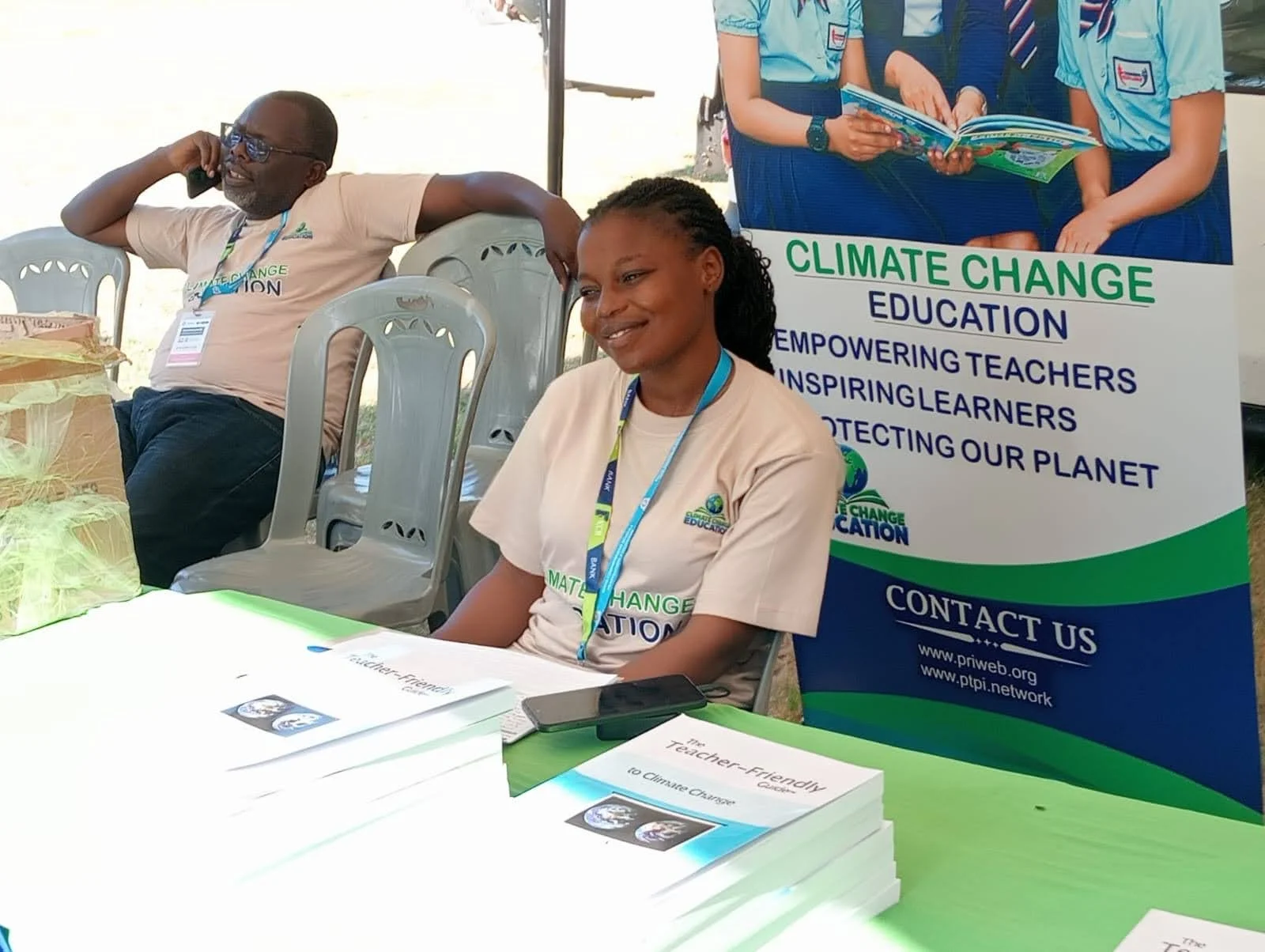
Last week, something we’ve been working toward for more than two years finally happened: 1,000 printed copies of the Teacher-Friendly Guide to Climate Change arrived in Kenya, and they went straight into teachers’ hands at a national teacher conference.

How it began
In spring 2024, our colleague Don Haas (Director of Teacher Programming, PRI) was introduced to Franklin Okello of People to People International Kenya by David Kay of Cornell University. What started as an introduction became a real partnership. Through 2024 and 2025, Don presented in online workshops for Kenyan teachers, and from the very beginning, Franklin had one big hope: to get Teacher-Friendly Guides (TFGs) into Kenyan classrooms.
How we support educators around the world
Franklin and People to People International Kenya know what Kenyan teachers need. Our role has been to use our expertise to support their vision with the resources we have been designing for educators. We learned that shipping our current stock of TFGs was far more expensive than printing in Kenya, so we worked with Franklin to print locally in Africa. Local printing also meant more books for the same dollars.
Print mattered, too. Internet and electricity are unreliable in parts of Kenya, and teachers strongly preferred a book they could hold, mark up, and share with colleagues, no connection required.
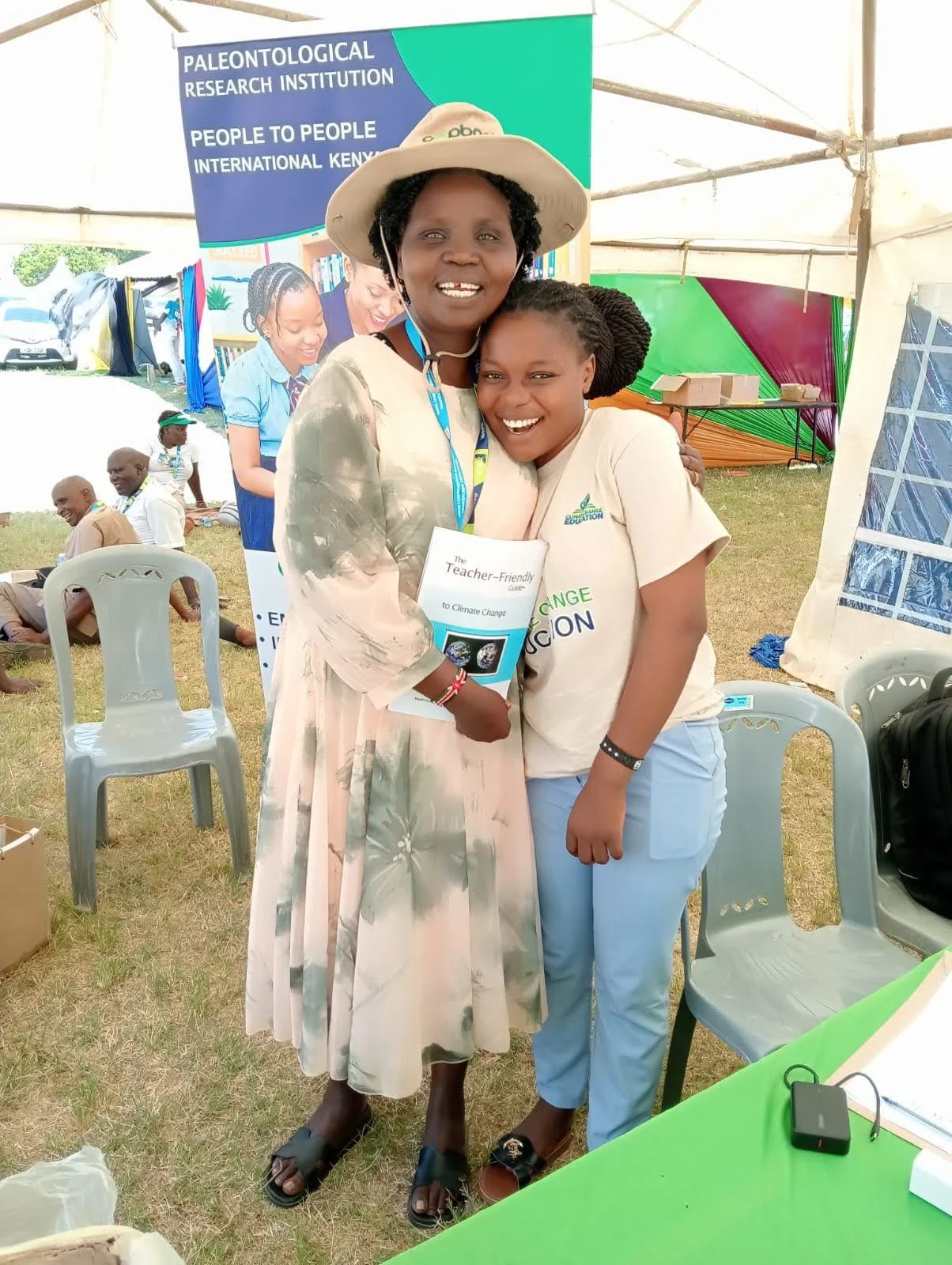
Kenyan teacher picking up their copy of the TFG
Two conferences, one day
Here’s our favorite part. On the first day Franklin distributed guides to teachers in Kenya, we were simultaneously handing out guides to teachers at the STANYS conference in New York. Two continents and two groups of teachers, all receiving the same resource on the same day – that is just so cool! Franklin’s booth was the most visited by teachers at the ECSHA National Annual General Meeting Conference 2026 in Kenya, and was featured in the program.
Why this matters
The needs of climate education in Kenya are different from those in the U.S. Per capita carbon emissions in the U.S. are about 40 times greater than in Kenya, yet the impacts of climate change, such as deadly droughts and floods, are far more dangerous for most Kenyans. Teachers there are preparing students for a reality that is already here, and we’re glad to help equip them.
Leshao Parsai, an educator from Baringo County, Kenya who stopped at the booth to pick up their copy of the Teacher Friendly Guide to Climate Change said:
“We have floods, we have also have lakes submerging farms, homes, schools and dispensaries and many other things, in fact our location has been submerged by lake water and we no longer have that location.
[The TFG book] is very helpful to the teachers because it will allow us to understand climate change, and it will impact the knowledge of the students and the students will apply the knowledge in their day to day life.
And the parents, the parents will also benefit. It will advise the parents on climate change when we have meetings. It will also assist other teachers at neighboring schools to understand more about climate change.”
What’s next?
We’ve submitted a grant proposal to the United Nations’ Ecosystem-based Adaptation (EbA) program and are hopeful. Whatever the outcome, we plan to keep working with Franklin and his team to host more online workshops. Our long-term dreams are to send members of PRI’s Climate Team to Kenya for teacher professional development and community connections, to welcome Franklin to PRI in Ithaca, and to present together at a conference.
Photos and video courtesy of Franklin Okello