
Making Mollusks Marvelous: Designing Museum Exhibits
There are many avenues for communicating science, but one of the most trusted avenues have been museum exhibits (Merritt, 2019). Those who have visited museums in recent years consider them to be the most trustworthy source of scientific information (Merritt, 2021), and trust is essential to successful communication (Bray et al. 2012). In 2001, a survey commissioned by the American Alliance of Museums found 9 out of 10 Americans considered museums to be trustworthy, with no other source of information rating a similar level of trust. Museums, zoos and aquariums remain trusted sources of public scientific information.
I recently had the opportunity to design a museum exhibit about mollusks, one of the most diverse groups of animals in the fossil record, and the most diverse phylum in the modern ocean. It is generally believed that only arthropods are more diverse, when both land and marine species are considered, although many mollusk species are likely undescribed (i.e., not yet named; Rosenberg, 2014). This exhibit was designed as part of the broader impacts of a US National Science Foundation grant to scientists at the Paleontological Research Institution and collaborators at the University of Kansas, William and Mary, and the Virginia Institute of Marine Science. The grant was part of the Biodiversity on a Changing Planet program, and the specific grant was entitled “Using the Past to Predict the Future: How Physiology and Other Functional Traits Determine Survival/Extinction in Western Atlantic Mollusks.” The scientific aim of the project was to study which traits were associated with extinction risk/survivorship (or other responses like migration) in marine creatures during a regional extinction on the US East coast ~2-3 million years ago and apply this knowledge to predict responses to modern climate change and other stressors. I worked with Jon Hendricks (now at the Milwaukee Public Museum) in the initial conceptualization of the exhibit, and then primarily with Warren Allmon and Whit Ribeiro on exhibit text and implementation.
What is a “broader impact” anyway?
Broader impacts are a required and evaluated component of any US NSF proposal, and the term encompasses all the ways funded research would benefit people beyond the direct answers obtained to research questions in the proposed research. Broader impacts can include aspects that build STEM (science, technology, engineering, and math) talent, lead to innovations or collaborations beyond academic research centers, engage a wide audience, or otherwise improve society in some way. All NSF proposals are evaluated both for both intellectual merit and broader impacts to ensure widespread benefit from federally funded research.
Our proposal included education and outreach for K-12 students and university students, and the design of a physical and online museum exhibit, as well as the public dissemination of digitized information from a number of museum collections. Each year ~30,000 visitors come to the Museum of the Earth, including K-12 students, university students, community members and tourists. In addition, over 1.2 million unique visitors view online content, including digitized versions of past special exhibits.
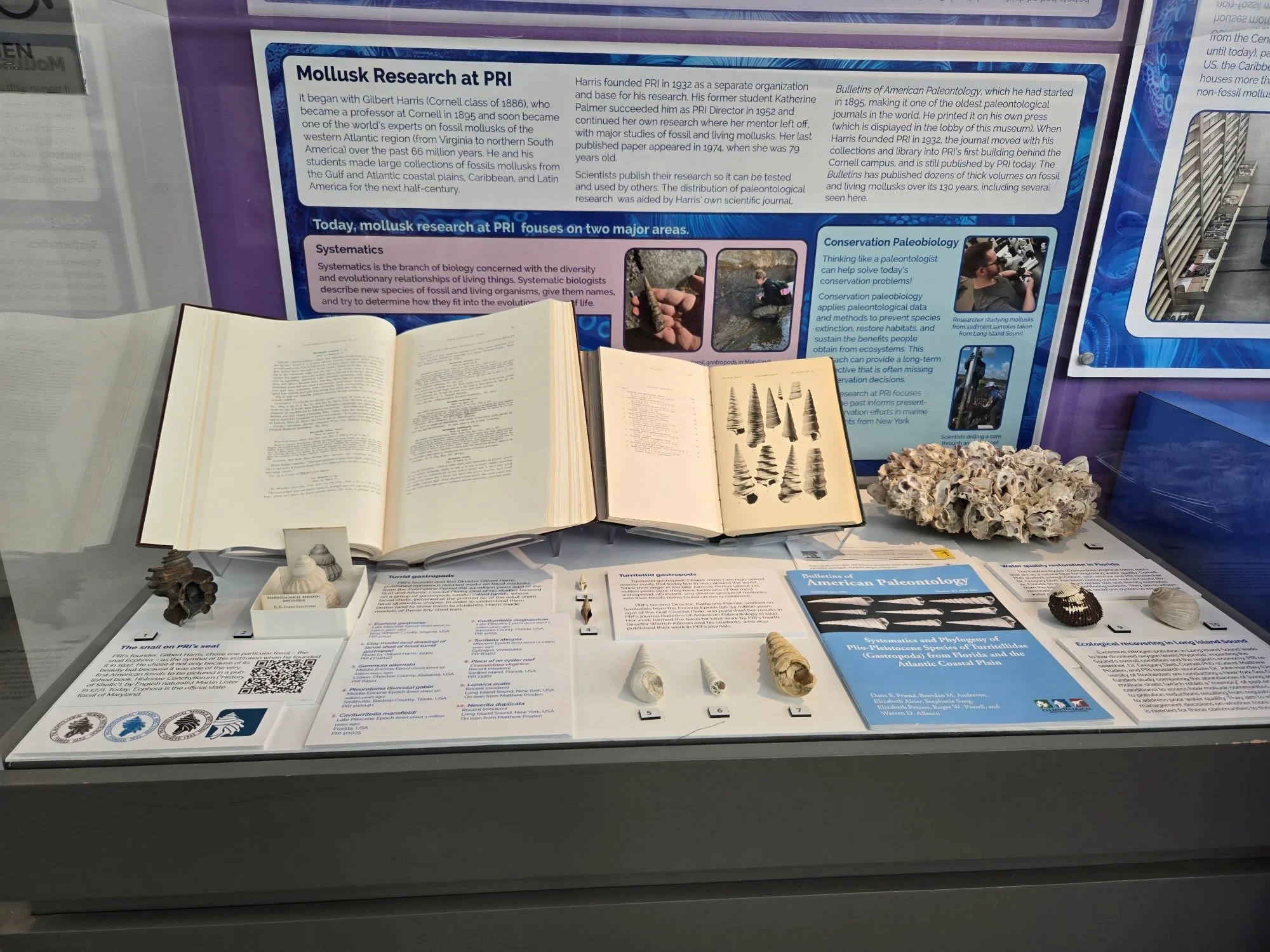
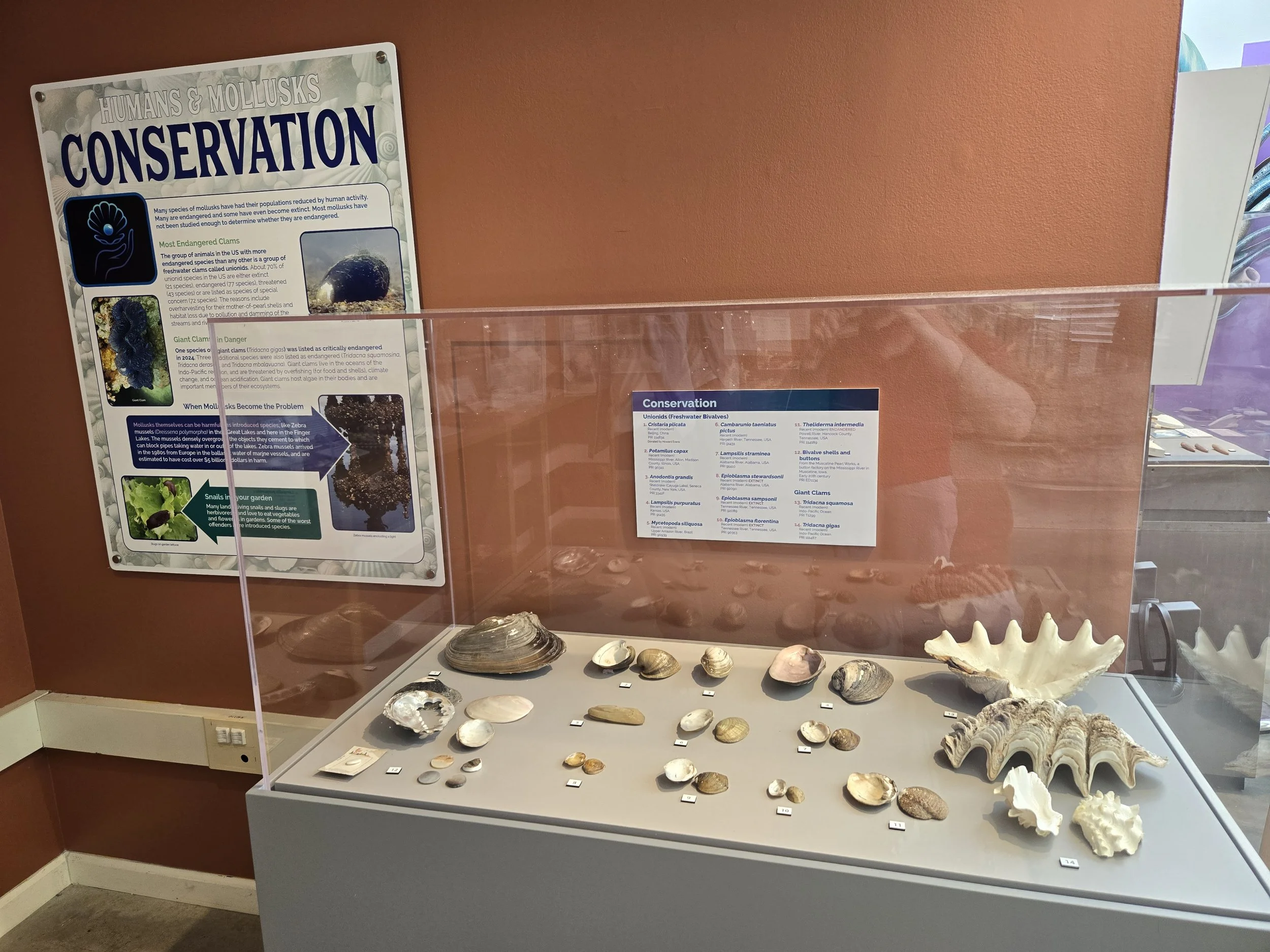
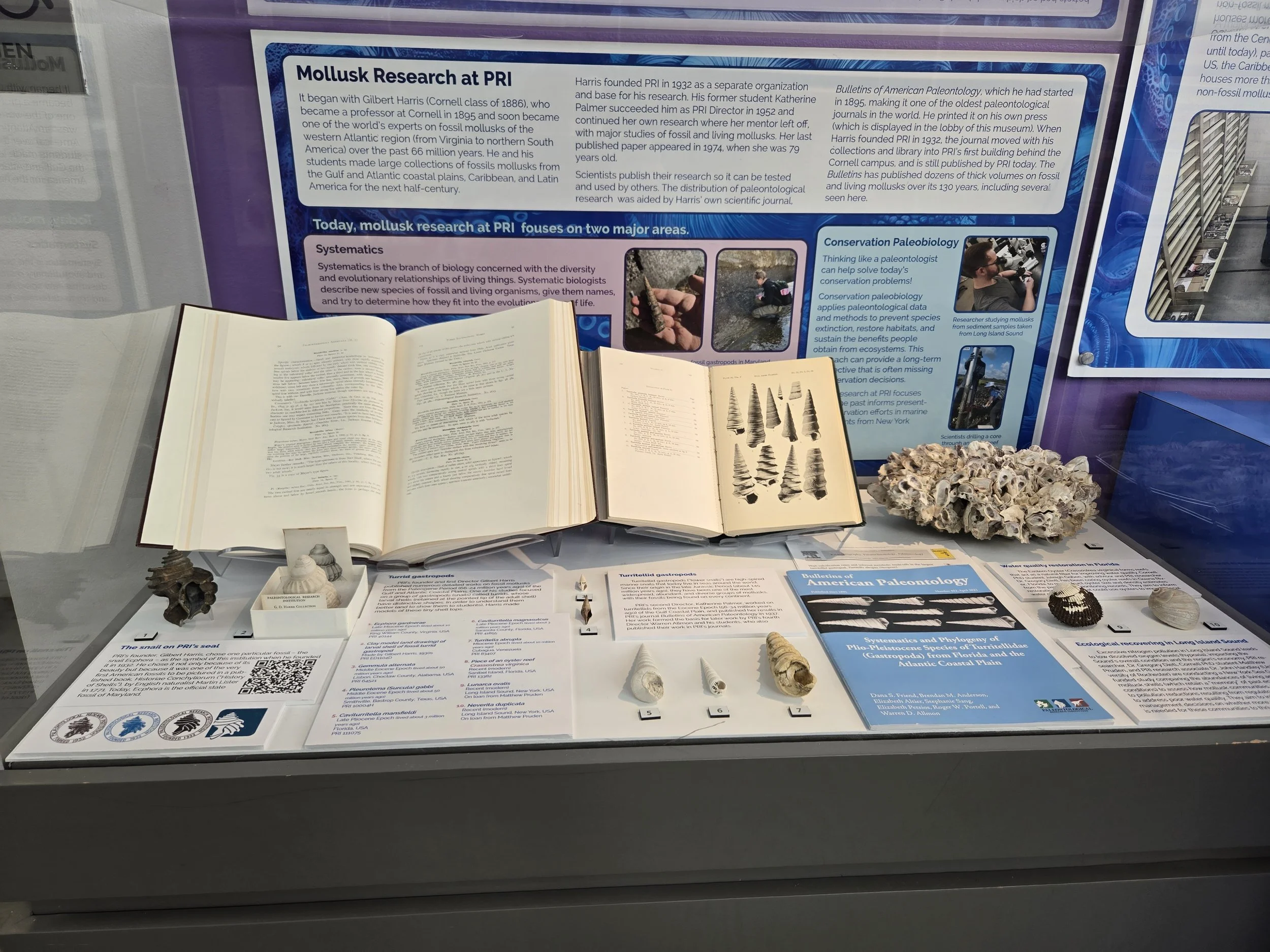
One section of the Marvelous Mollusks exhibit focuses on PRI’s 93-year history of pioneering mollusk research.
The venue
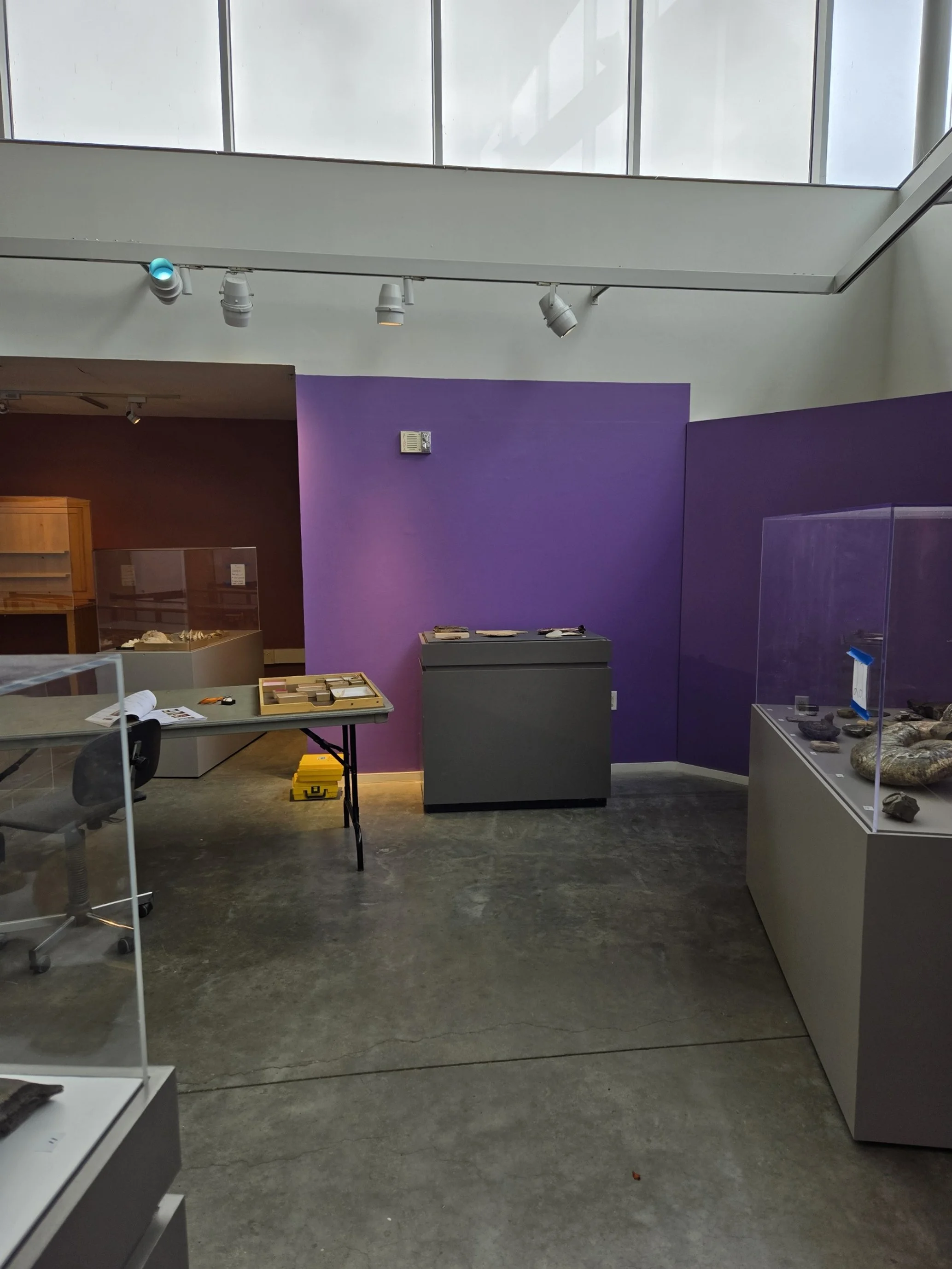
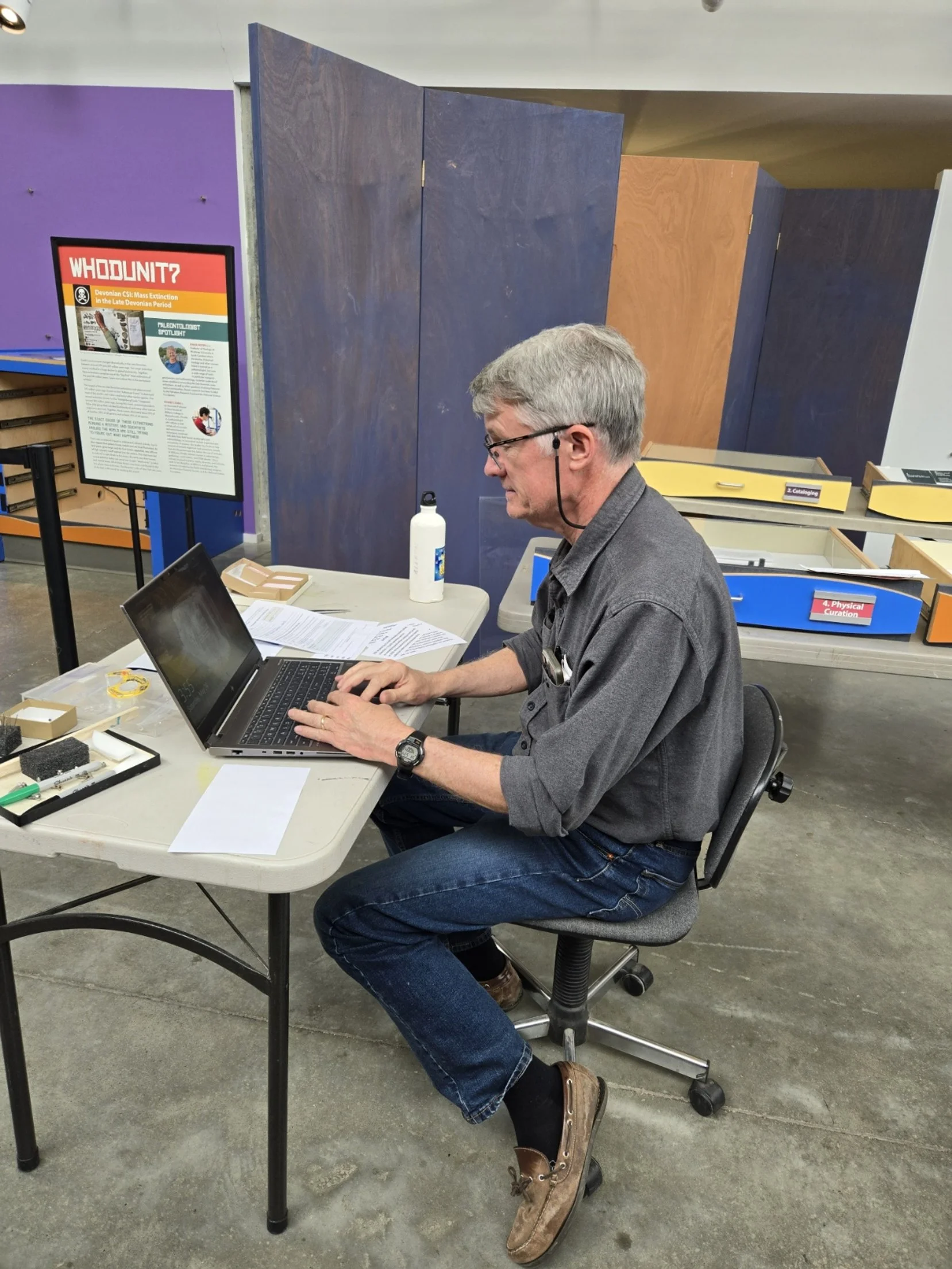
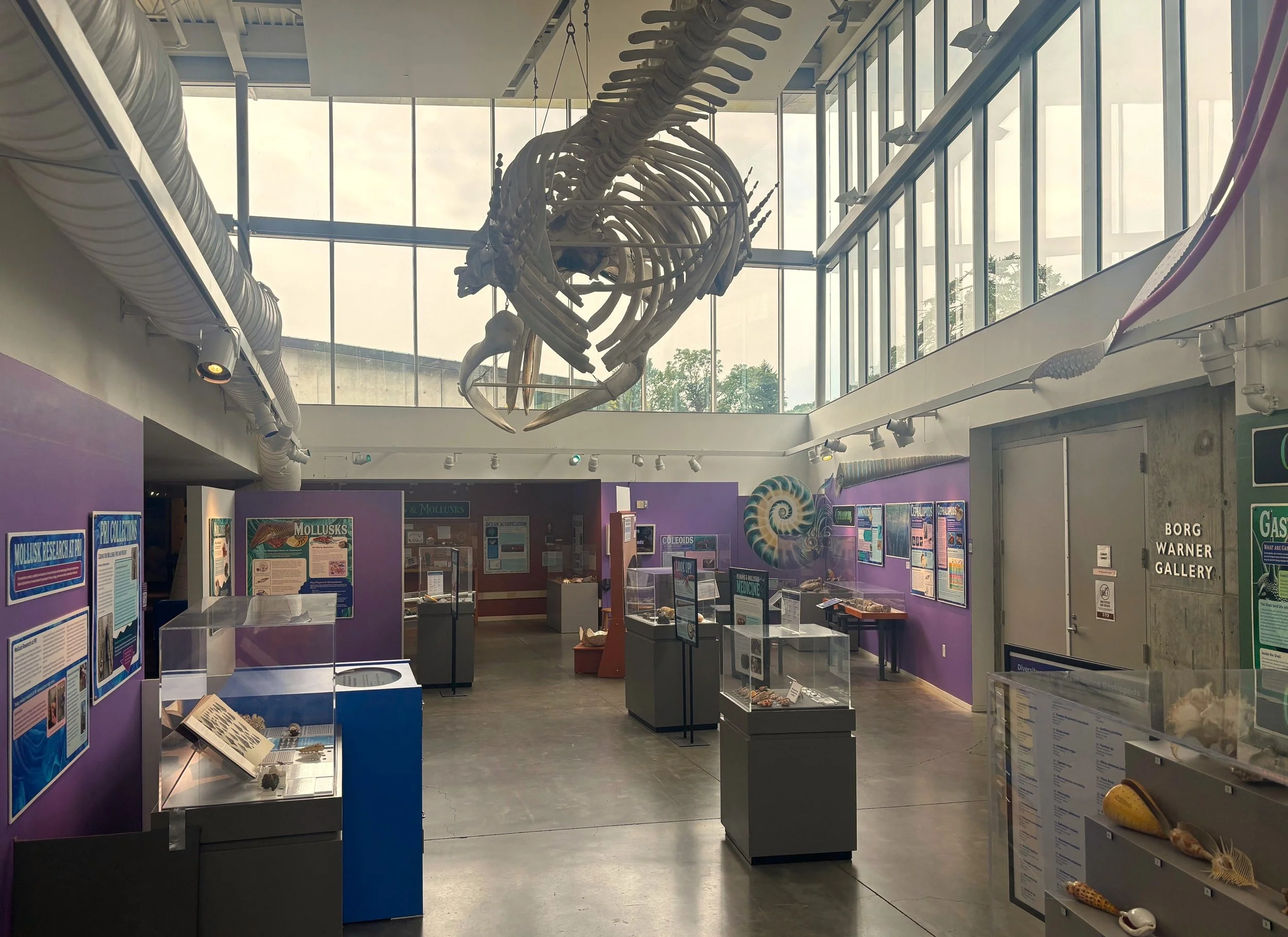
The Museum of the Earth is one of the venues for public education operated by the Paleontological Research Institution (PRI) in Ithaca, NY. The PRI was founded in 1932 and houses over 7 million fossil specimens, making it one of the largest collections in the United States. A public museum was opened in 2003, making the public venue a modern space. The permanent exhibits include a walk-through of geologic history, with wider galleries dedicated to time periods well represented in New York, an exhibit on climate change, and a fossil preparation lab. A separate gallery space is allocated for temporary exhibits, beneath the skeleton of a North Atlantic Right Whale. Within this space we had some flexibility to construct and arrange the exhibit components. The Paleontological Research Institution has unfortunately been subject to a recent financial crisis (Ortega 2025) due to non-payment of a long-term pledge of a major donation, leading to significant reductions in staffing, and therefore this exhibit was designed and constructed with around half the staff anticipated at its inception.
The audience
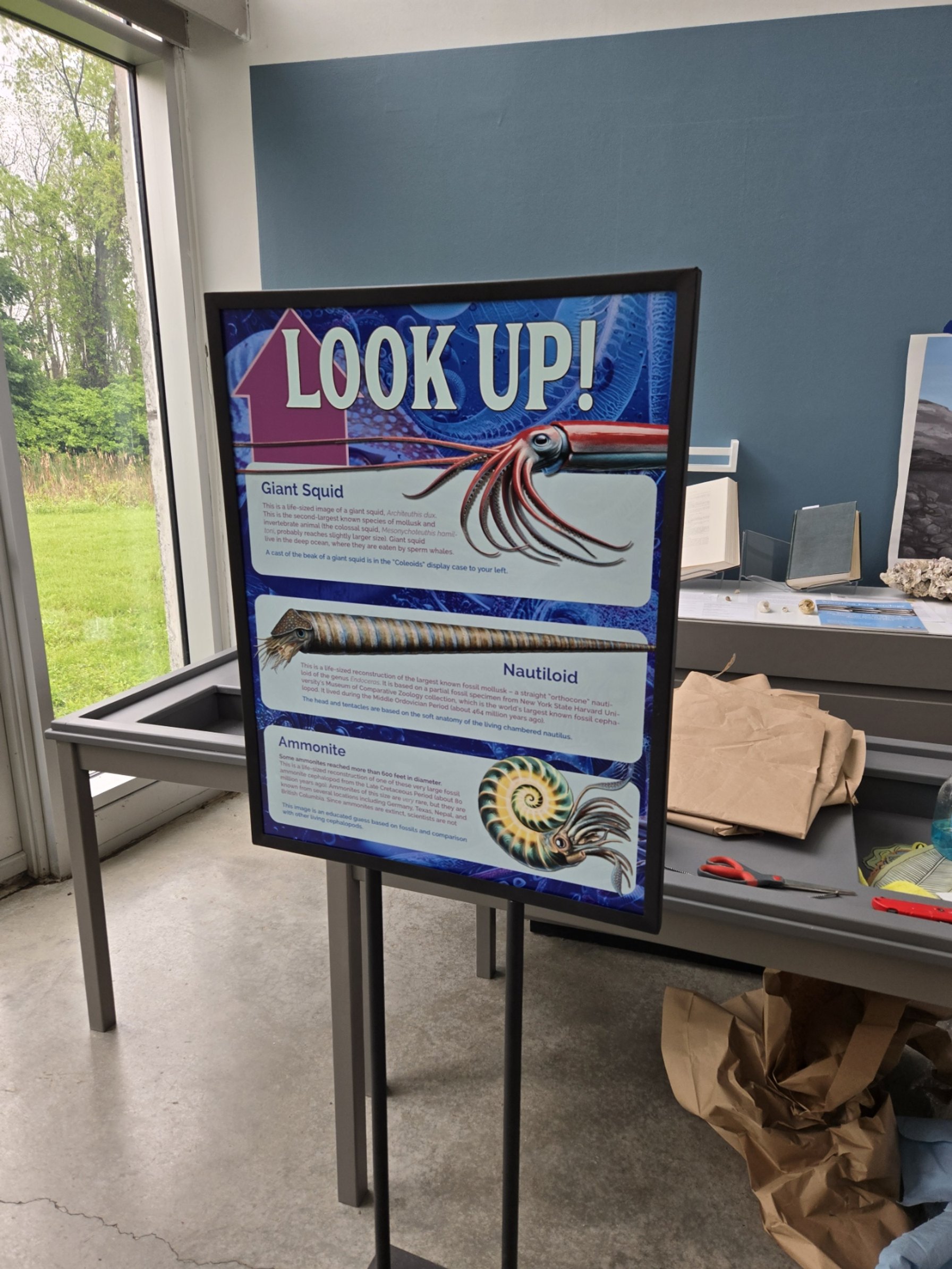
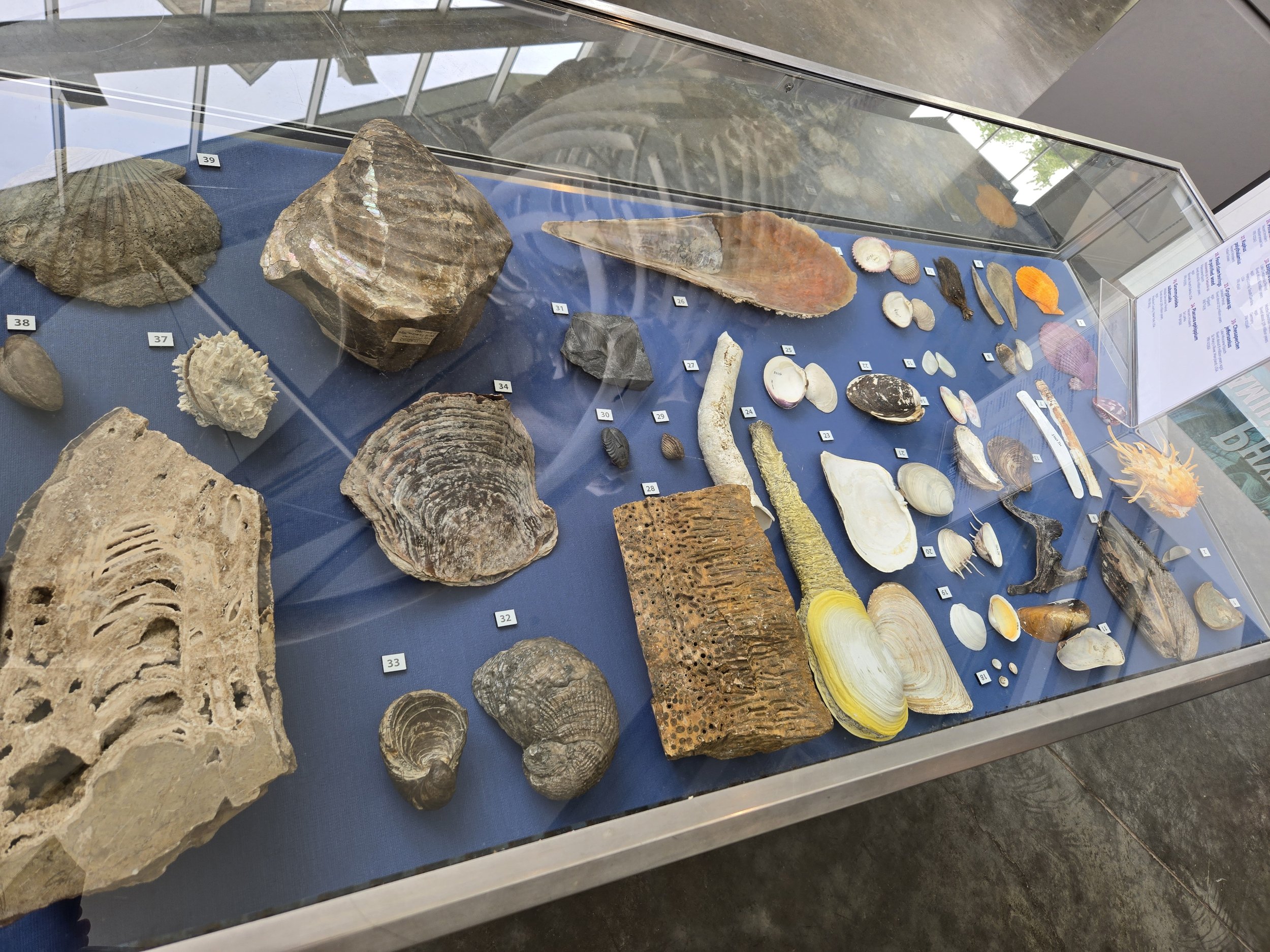
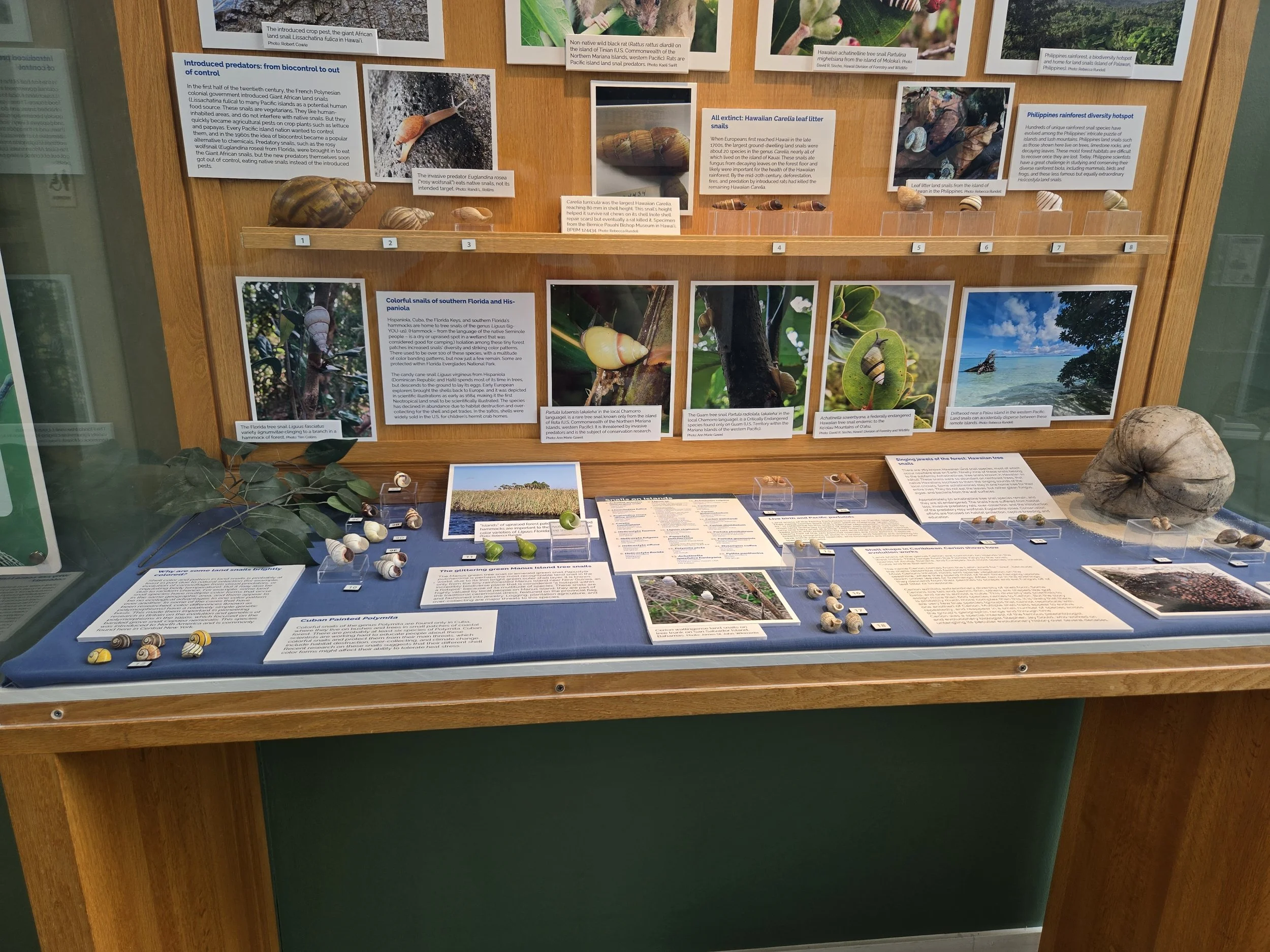
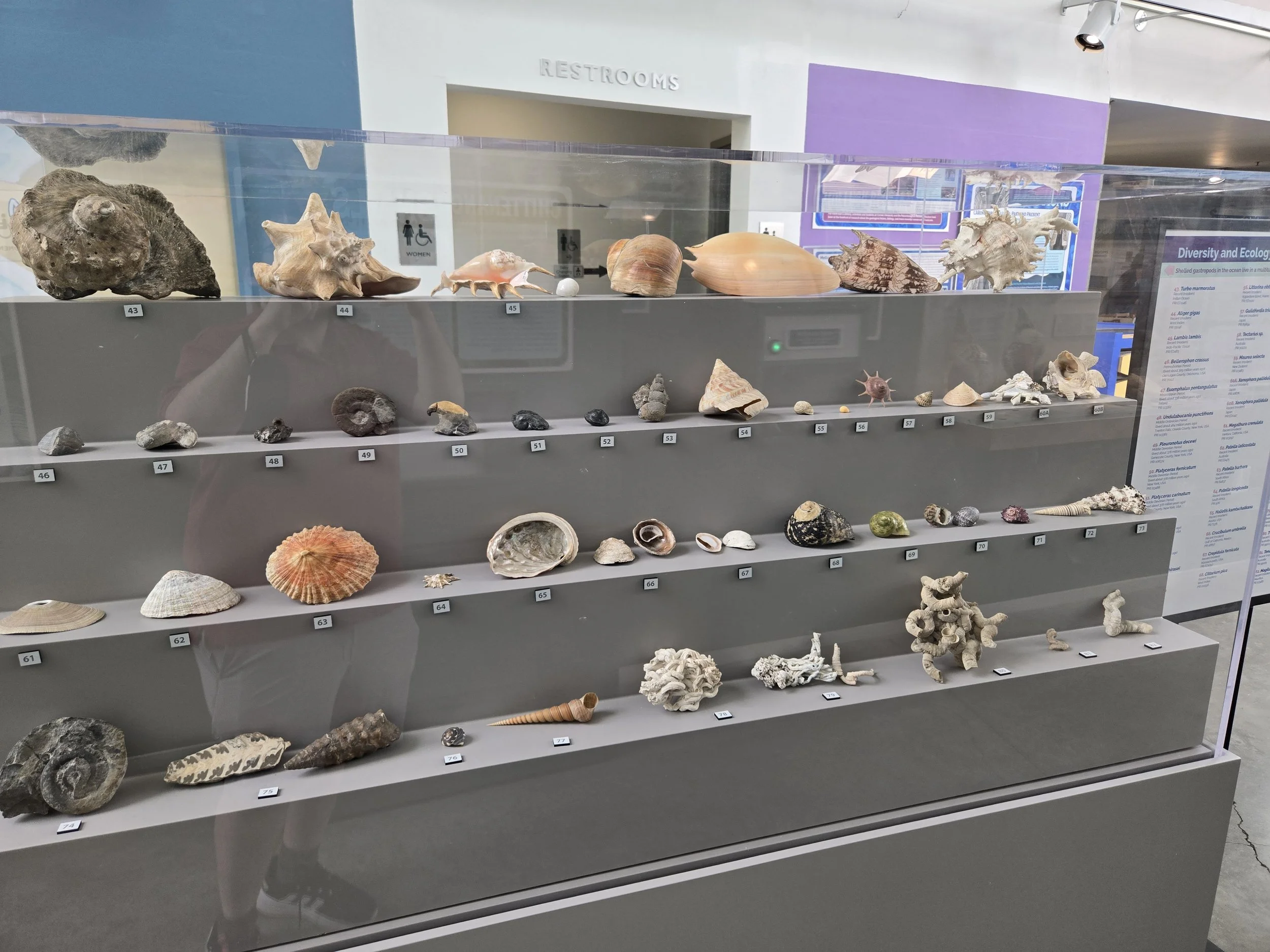
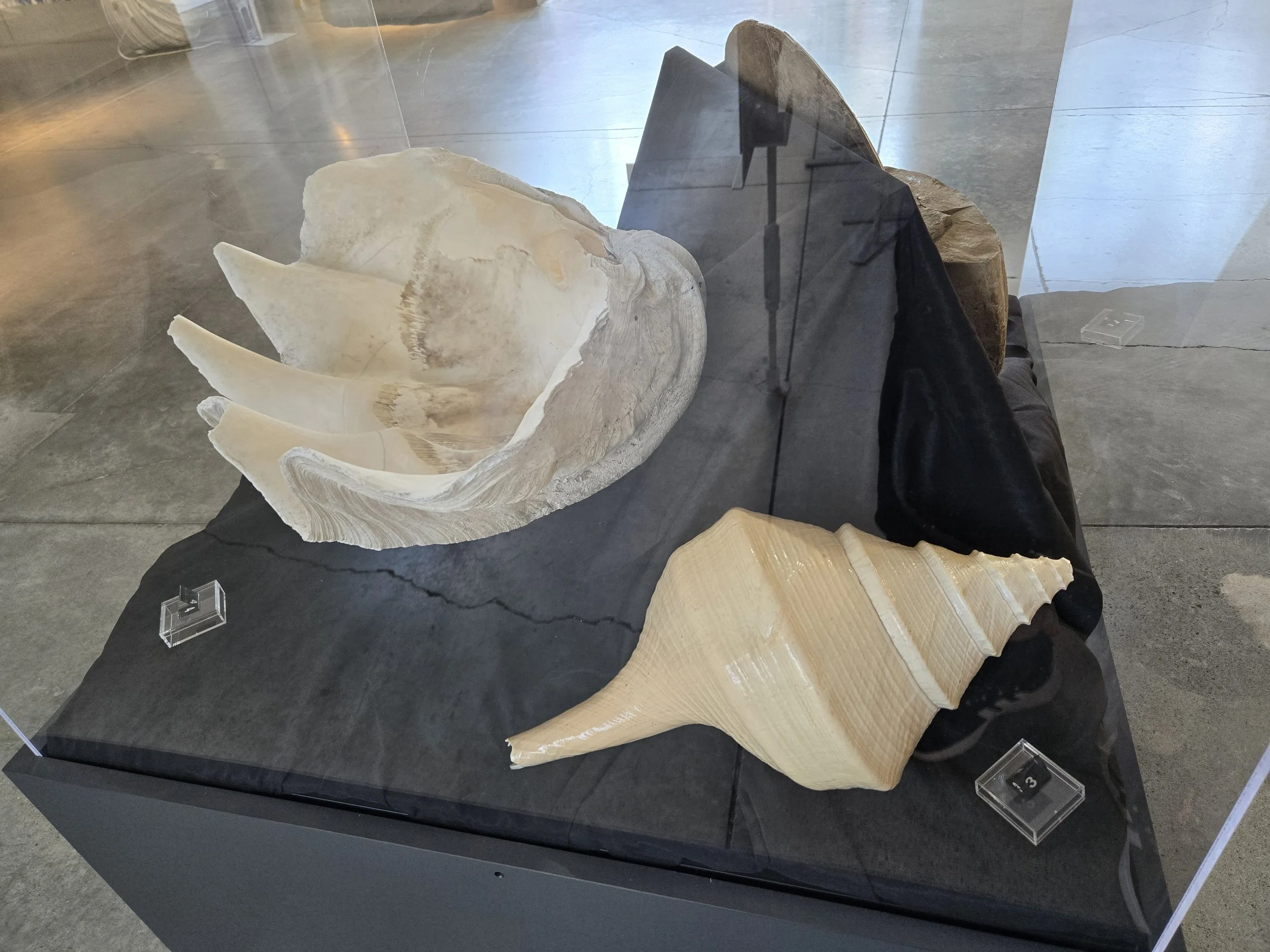
Knowing your audience is important in any attempt at science communication. The audience for this exhibit will have 4 major constituencies which each have different needs and desires when coming to a museum. The first audience most people will think of is children of a variety of ages, the second includes adults who are accompanying them or who have a general interest in science. Researchers are often tempted to assume audiences have more background information than they actually have. In our case, we were a group of 4 PhDs who do the vast majority of our work on mollusks, and are aware we are in more danger of this mistake for this exhibit than any previous exhibit. Frequently we have come back to the mantra that we need to keep in mind that a very high percentage of the population does not know that seashells are made by living things, or think they are made originally by hermit crabs (). When we planned the exhibit we wanted to convey some basic information about these animals, including their diversity, their ecology, and their importance to humans. A key choice early on was to overwhelm the audience with diversity wherever possible, as displaying a broad variety of beautiful shells would be of interest to any age group. Another choice made to have broad appeal was to highlight some of the largest animals, like the giant squid, a giant extinct orthocone, the largest ever clam, and the largest ever snail using life-sized wall decals so that visitors could compare their sizes.
Ithaca New York then complicates this dynamic by adding a large population of research scientists and professors associated with Cornell and Ithaca College, who may be seeking more detailed information than the majority of visitors. Finally, PRI has been a leader in creating accessible online versions of all of its temporary exhibits, even before the COVID-19 pandemic. Online users include K-12 classrooms and university students and professors, as well as others with interests in the particular subject areas of these exhibits. Because the last two audiences have a lot of overlap in the level of detail they are seeking, directing in-person visitors to additional information in the online exhibit using QR codes has been a useful tactic in our space.
Choosing stories
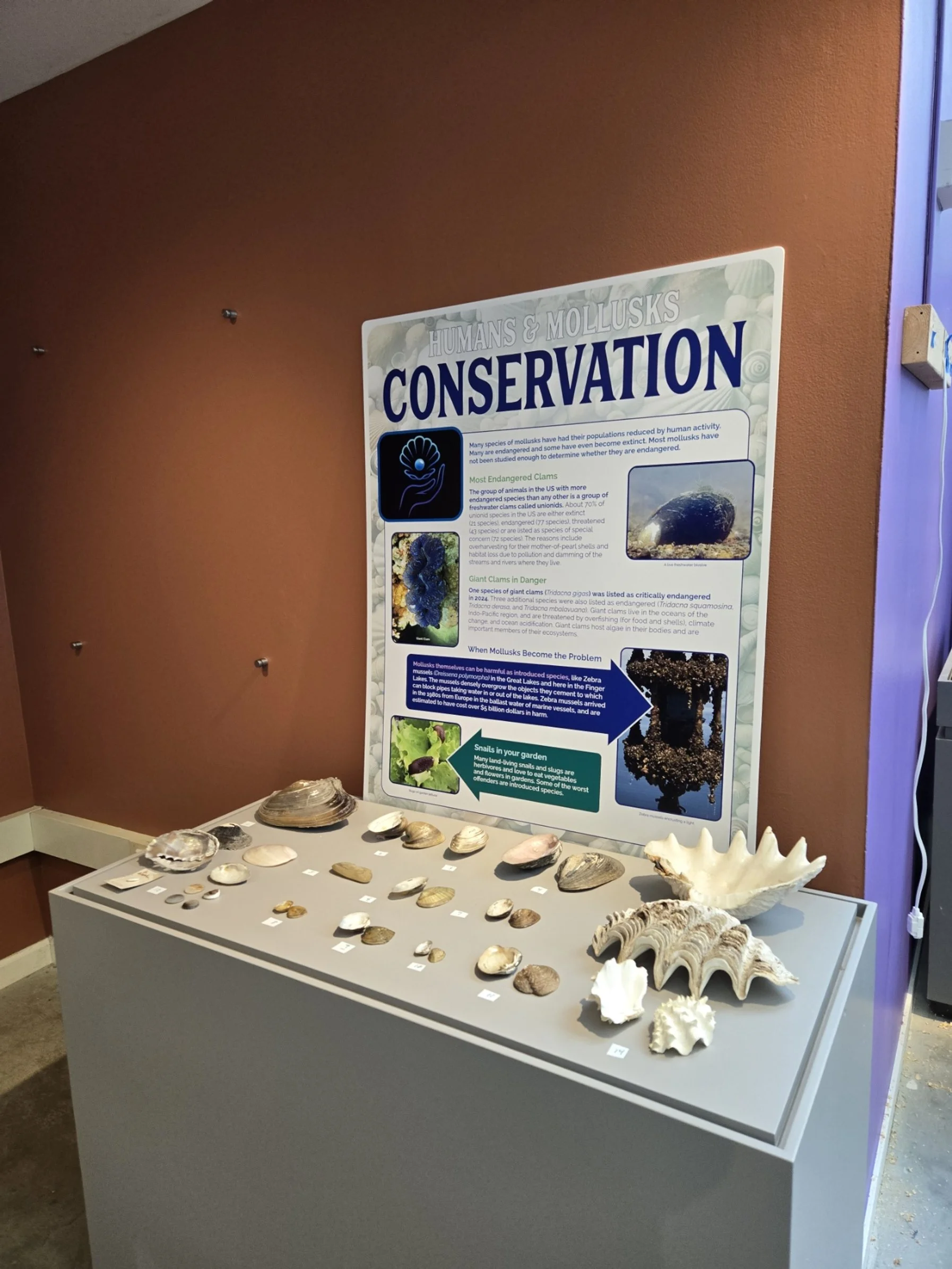
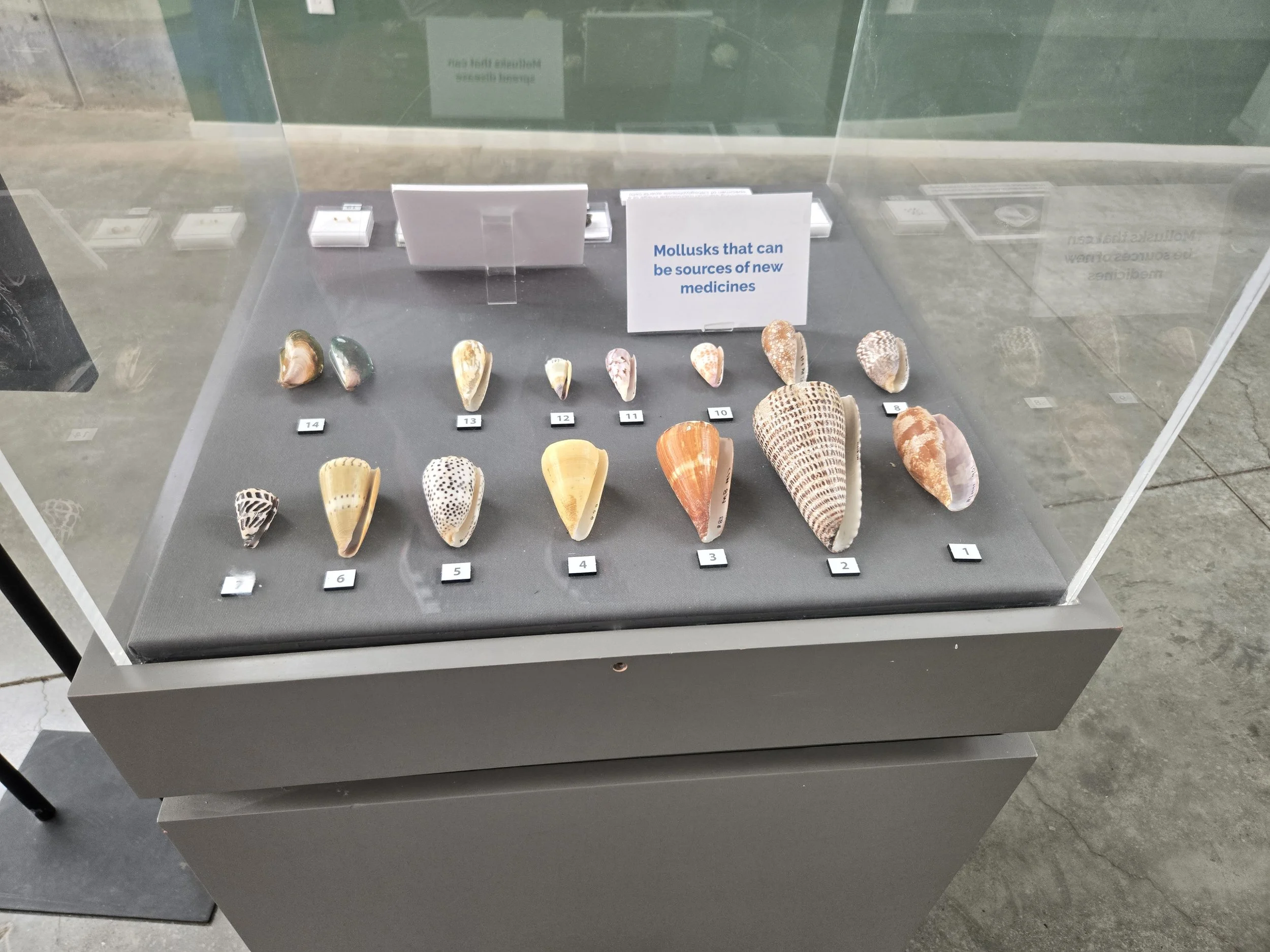
Humans learn best when you can make connections between new information and their own prior experiences or knowledge. When designing an exhibit scientists and museum professionals will choose what topics they want to cover or types of information they want to convey. This can help with overall exhibit design and help in the process of choosing objects as well. Inevitably there will be more information that researchers want to include than will fit in one exhibit. There is always more to learn and always more we want to share—after all we chose to dedicate years or decades of our lives to these topics. Stories we chose to focus on included mollusks in medicine (both as disease vectors and sources of medicine), research conducted at PRI, endangered and recently extinct mollusks, and mollusks in food and art.
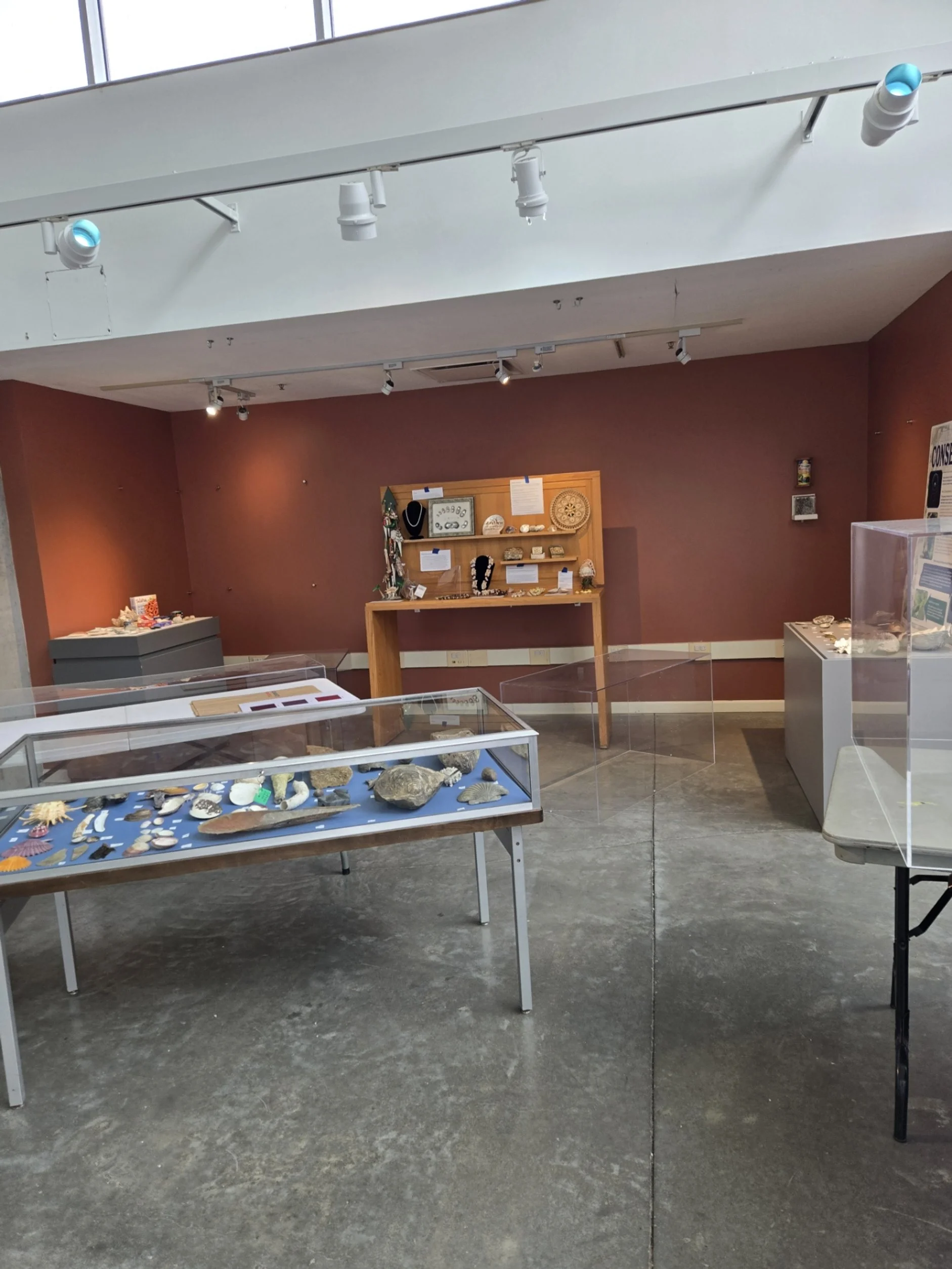
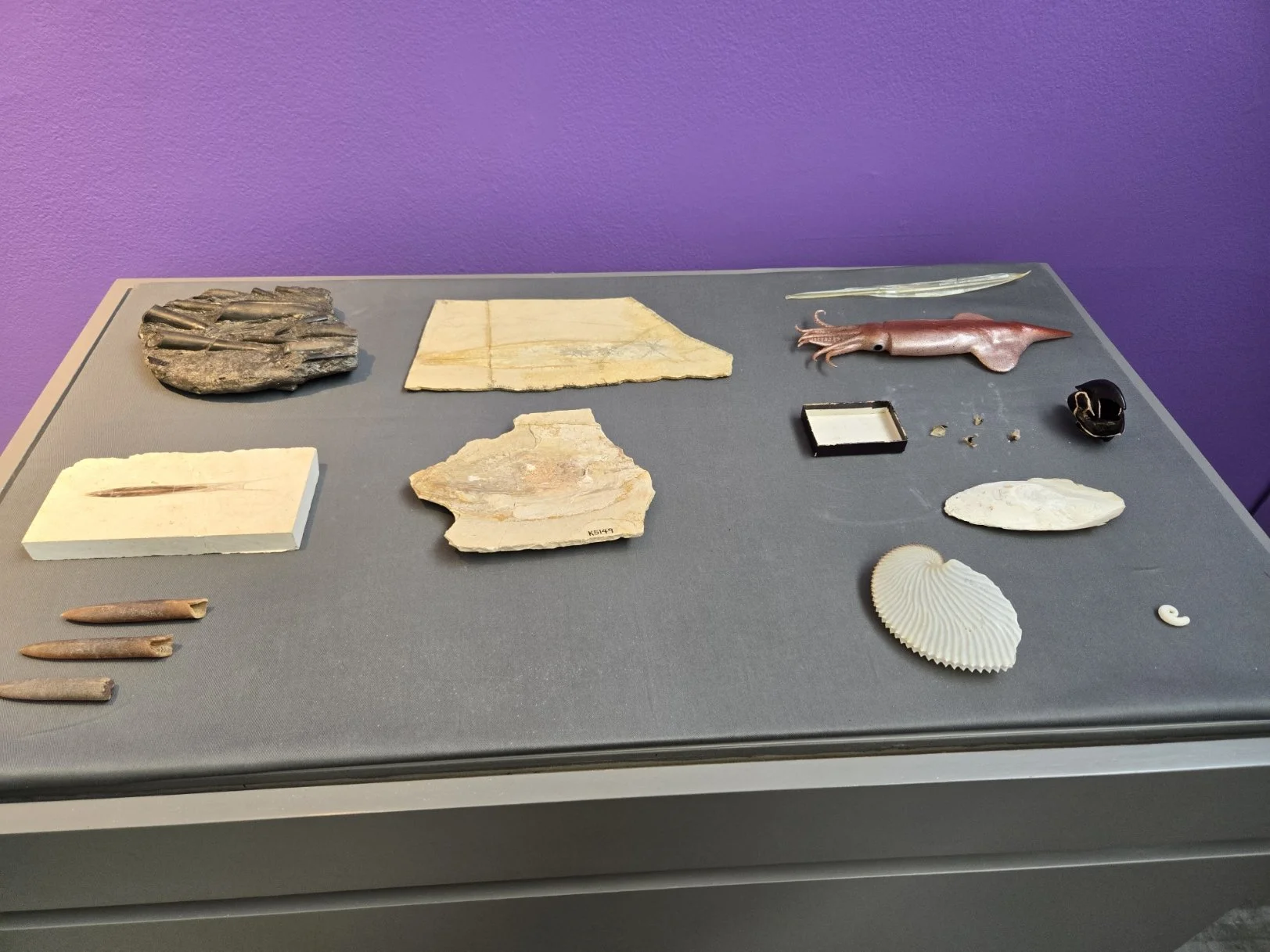
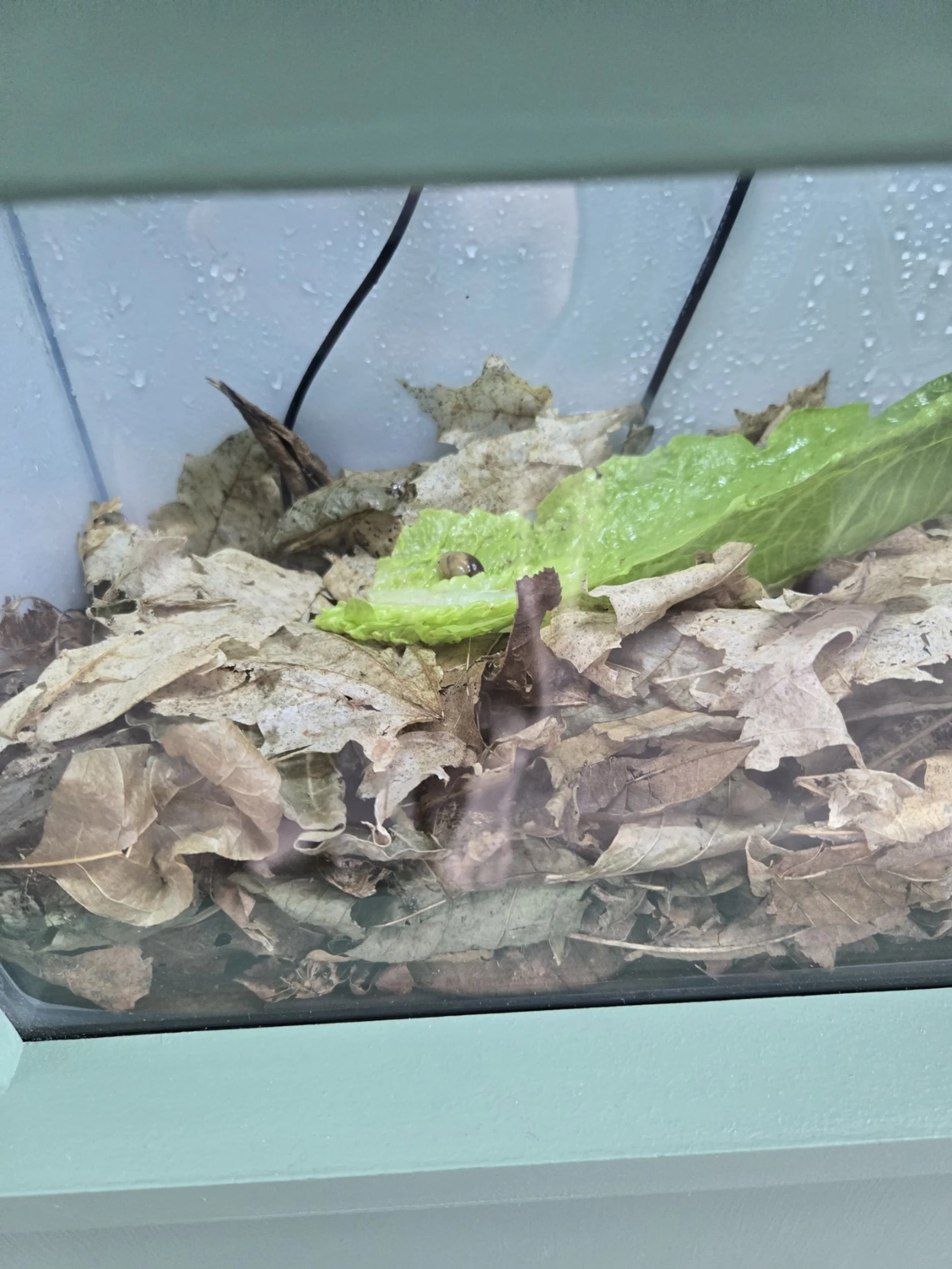
The overall arrangement of topics seemed clear from the beginning. There are 3 major groups of mollusks, bivalves (clams and relatives), gastropods (snails and slugs), and cephalopods (octopuses, squid, ammonites, etc), which would each get a section of the exhibit space. We would also have a space for introducing mollusks and the other classes within the group, and a section on humans and mollusks. We also constructed a terrarium to maintain a colony of endangered amber snails native to the Finger Lakes region of NY. In early drafts we had considered having both a terrarium and a touch tank with intertidal marine snails, but reduced staffing at the Museum meant that live animal care in that type of environment could not be part of the final exhibit. Finally, our education team designed a children’s area with books and interactive activities aimed at younger visitors, including a space for an activity where modern and fossil Florida shells could be touched and compared.
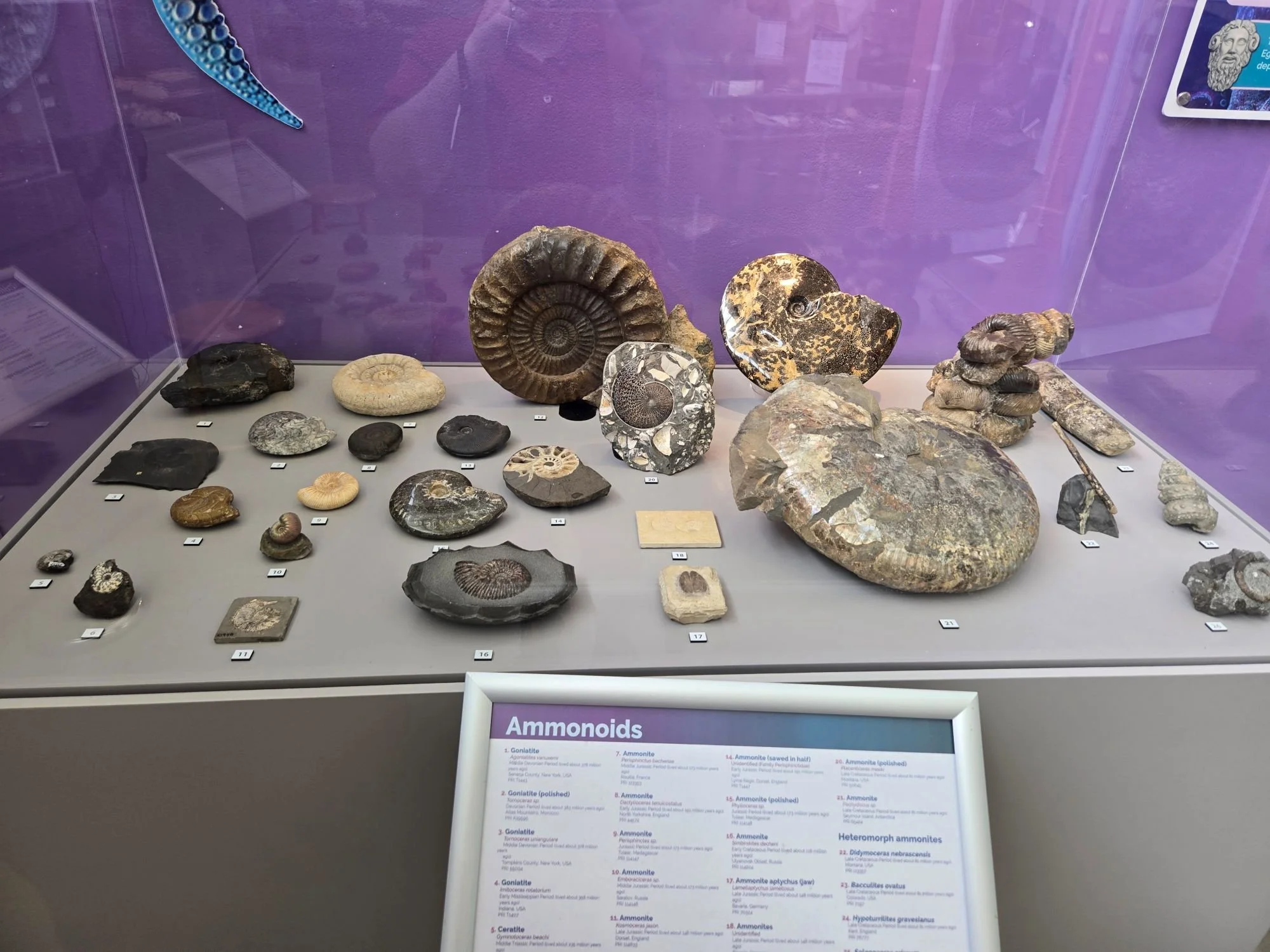
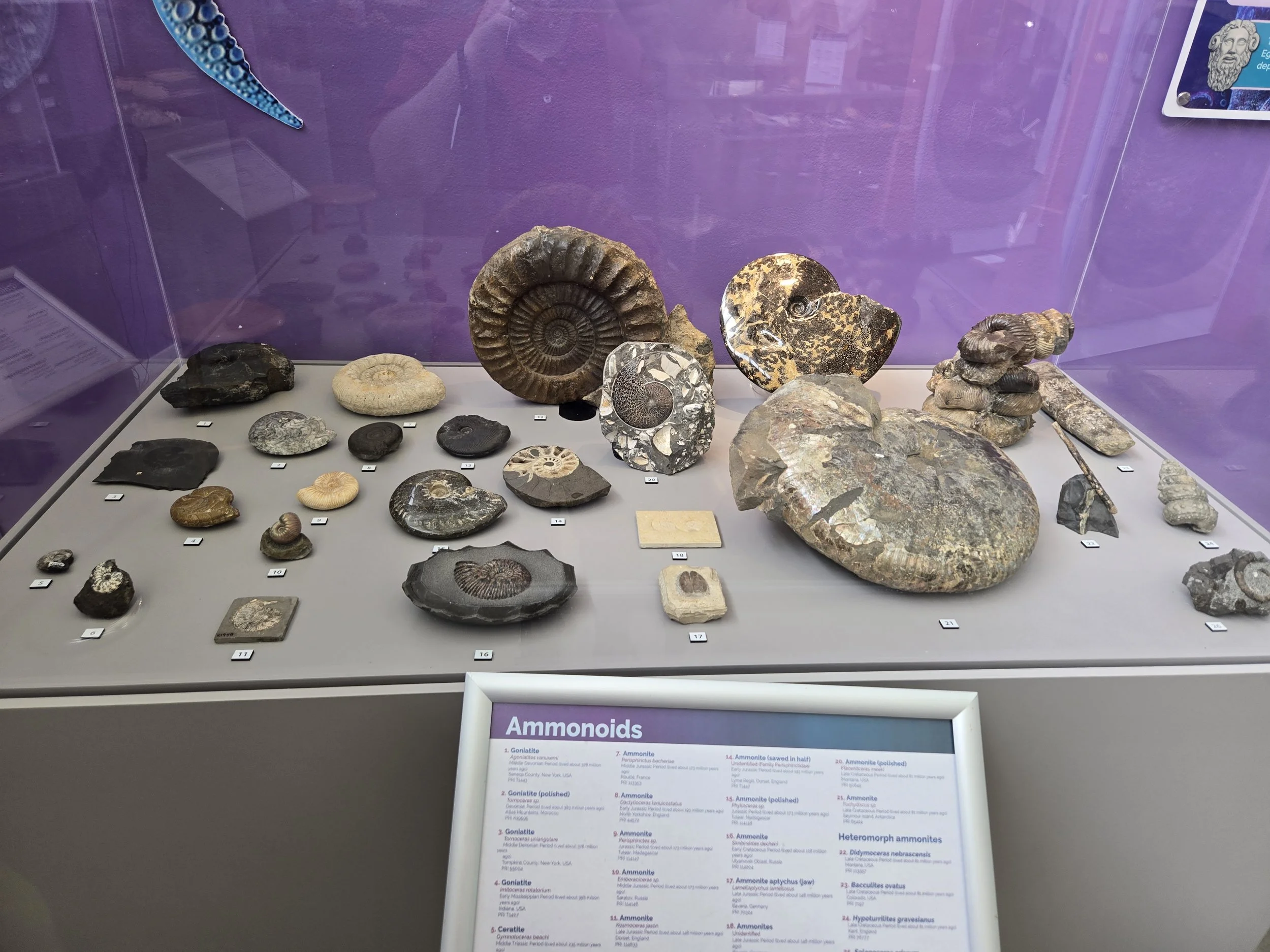
The ammonoid display case features multiple large display specimens that were found in a drawer labeled “Good ammonites for exhibits”.
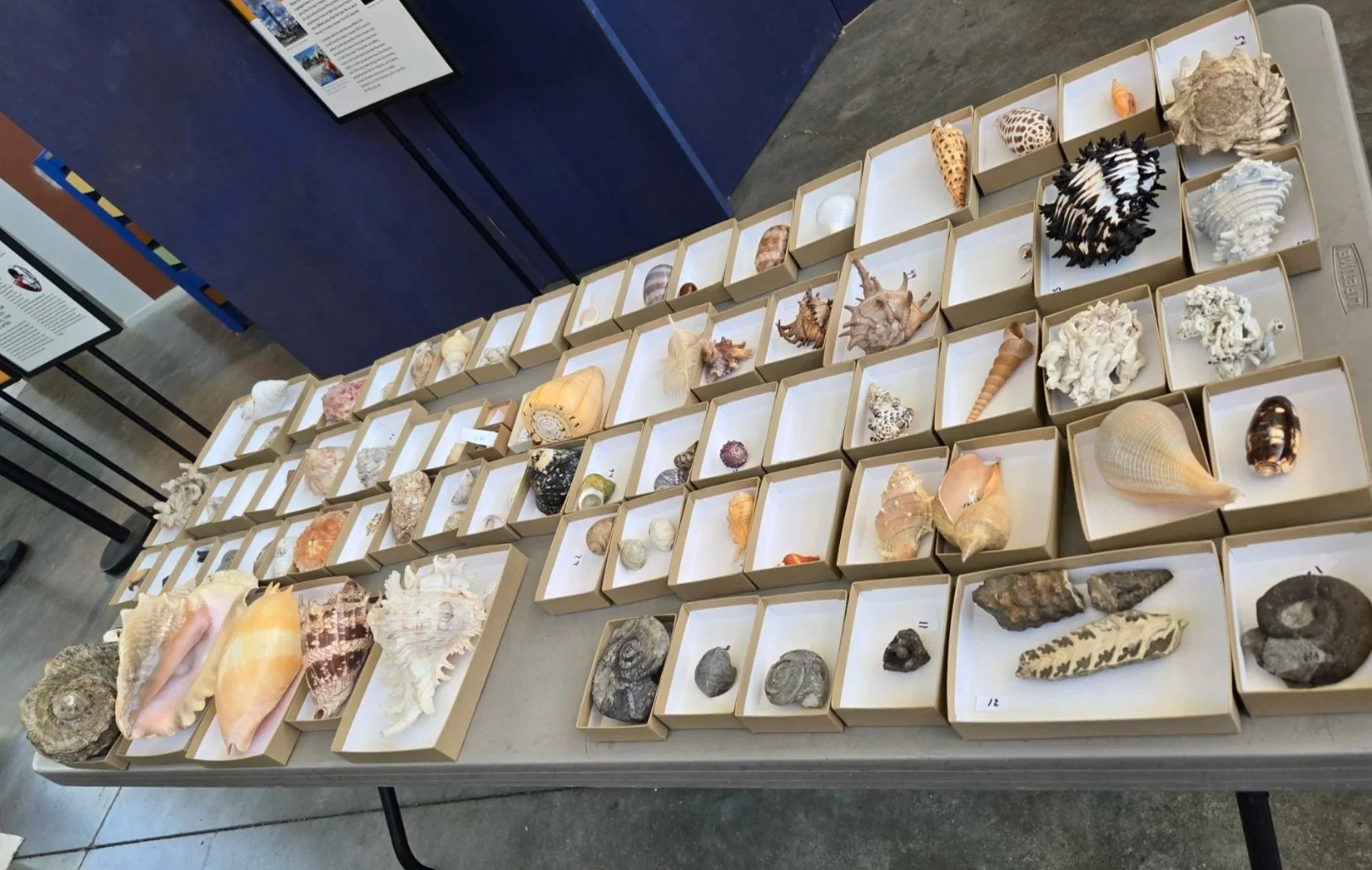
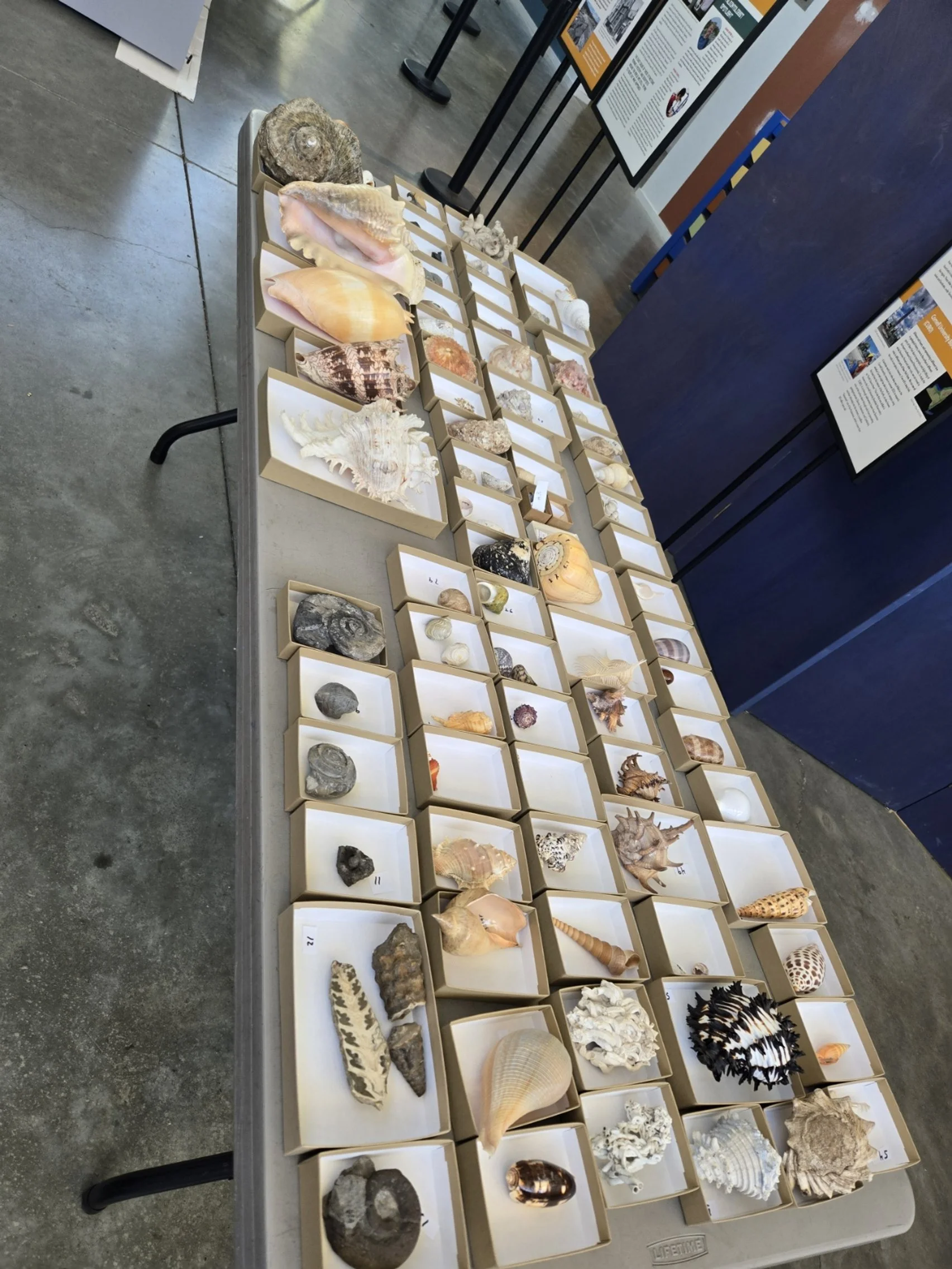
A table of various gastropod shells to be potentially placed in the Gastropod Diversity display case.
Choosing objects
After an initial brainstorming session on potential stories to tell, one of our first projects was examining the research collections for specimens to put on display. The Paleontological Research Institution houses more than 7 million specimens of fossil and modern organisms, and the collection is primarily mollusks. Even researchers with decades of experience working with a collection can still be surprised by some of the specimens we find (a Jurassic vampire squid and an Eocene Campanile giganteum, the largest ever snail, stand out in our case). We would later be equally surprised to find a drawer labelled “Good ammonites for exhibits,” after months of wondering why we were having difficulty locating excellent large display specimens.
Not every specimen or object is well suited to being on public display. Soft-bodied animals require preservatives which may be hazardous to human health or are flammable (we considered displaying a giant squid tentacle but having sufficient preservative on display in a manner acceptable to the fire code would have effectively consumed the entire exhibit budget). Other objects may not tolerate the changes in temperature or humidity common when large numbers of people move through a space like the museum over the range of seasonal conditions experienced in upstate New York, and as a museum we have an obligation to properly care for the materials donated to us.
After we had finalized the stories we would tell, we returned to the collections to choose particular species and began the process of arranging cases which could hold the specimens in the exhibit space. At this point we could choose the individual specimens and arrange them as they would go on display. The lots containing specimens were moved to a separate part of the collections and we select every individual specimen that will be on display and file paperwork to loan it from the collections to the exhibit. While loaning things from one building to the next may seem odd, this helps ensure that every specimen is returned to the proper place in collections when it goes off exhibit, and it also makes sure that all the other information associated with the specimen (e.g., the name, the location it was found, the geologic age) remains correct. When these types of data are lost, a specimen loses a tremendous amount of scientific usefulness. In the case of our institution, materials donated without these types of information either become part of the “teaching collection” (they are after all still representatives of whatever species they are) or are donated for use by other educators.
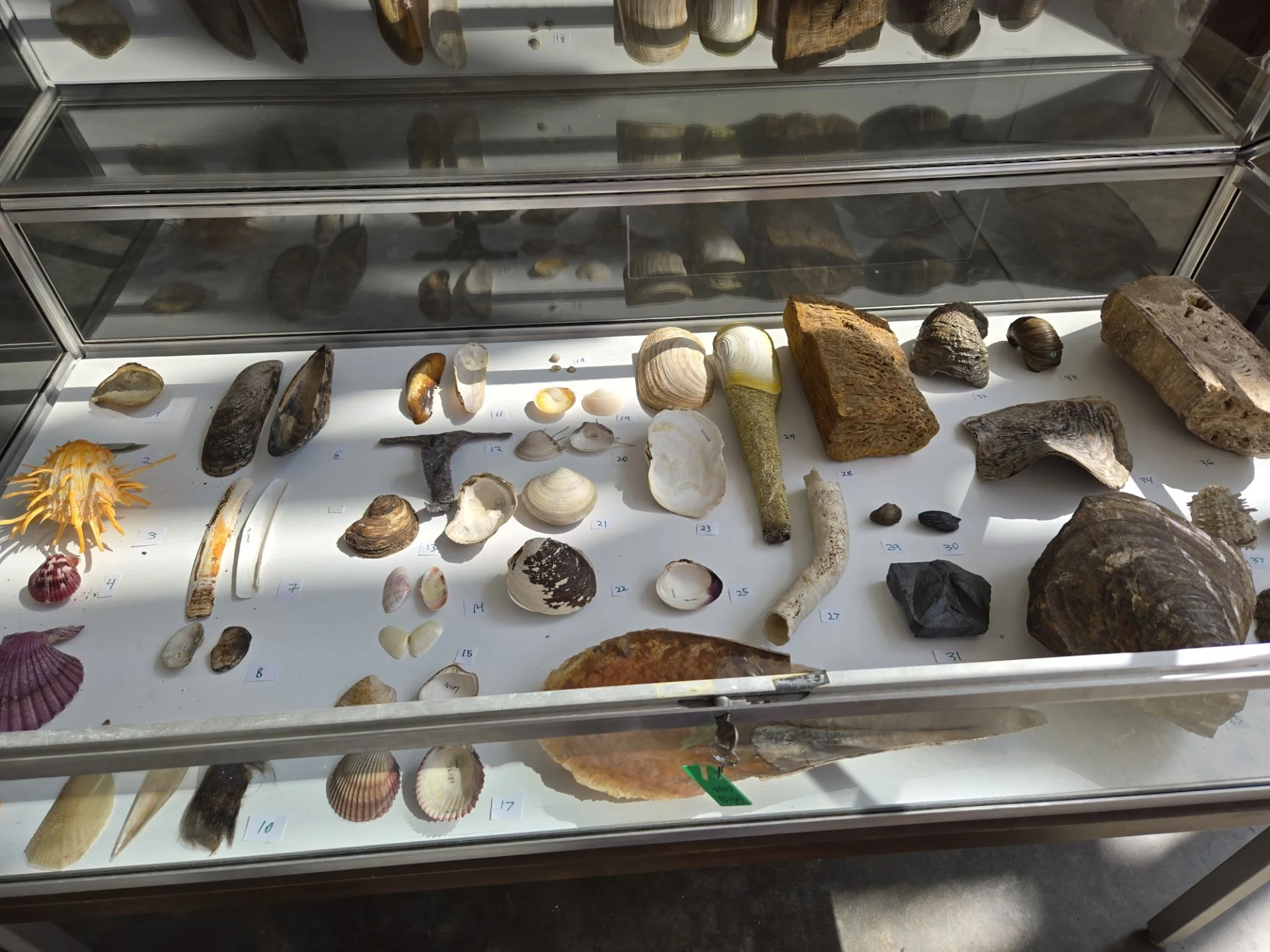
Finally, all the specimens on exhibit are numbered, with identifications and information on each listed for visitors. In most cases this information includes the specimen number, species name, source location, and the geologic age of the specimen. Other information provided with these labels might include things such as the body part being displayed, the ecology of the animal, or how it is used in medicine. Displayed specimens are also photographed for the online component of the exhibit.
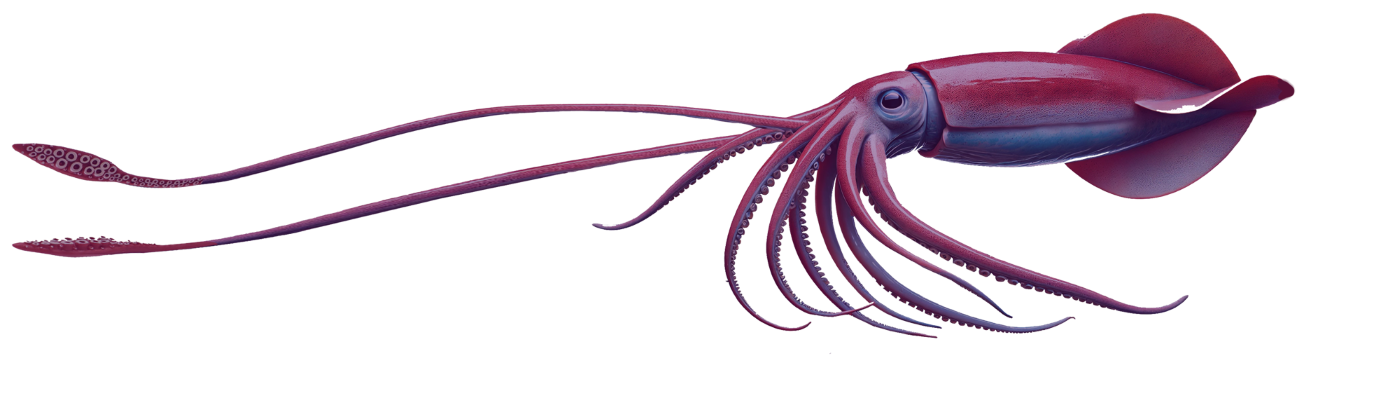
Artist Wendy Marvel’s original design for the giant squid wall decal.
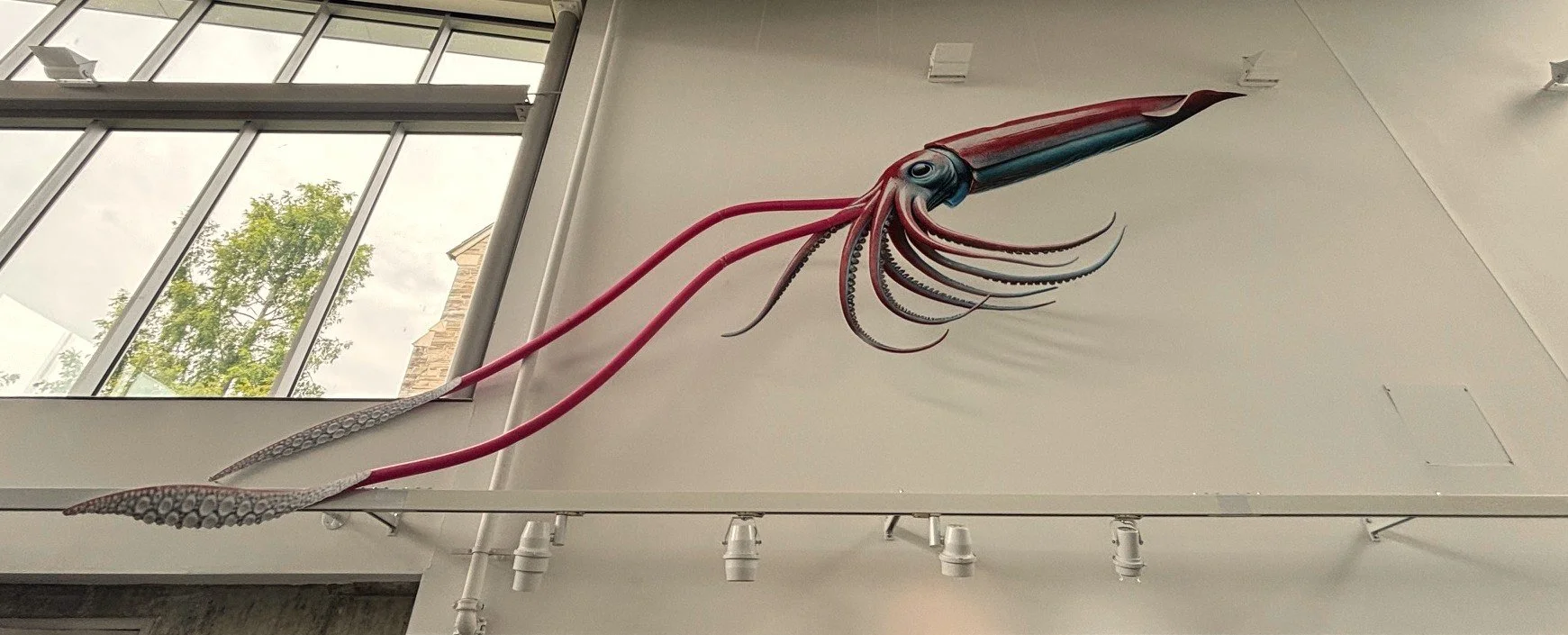
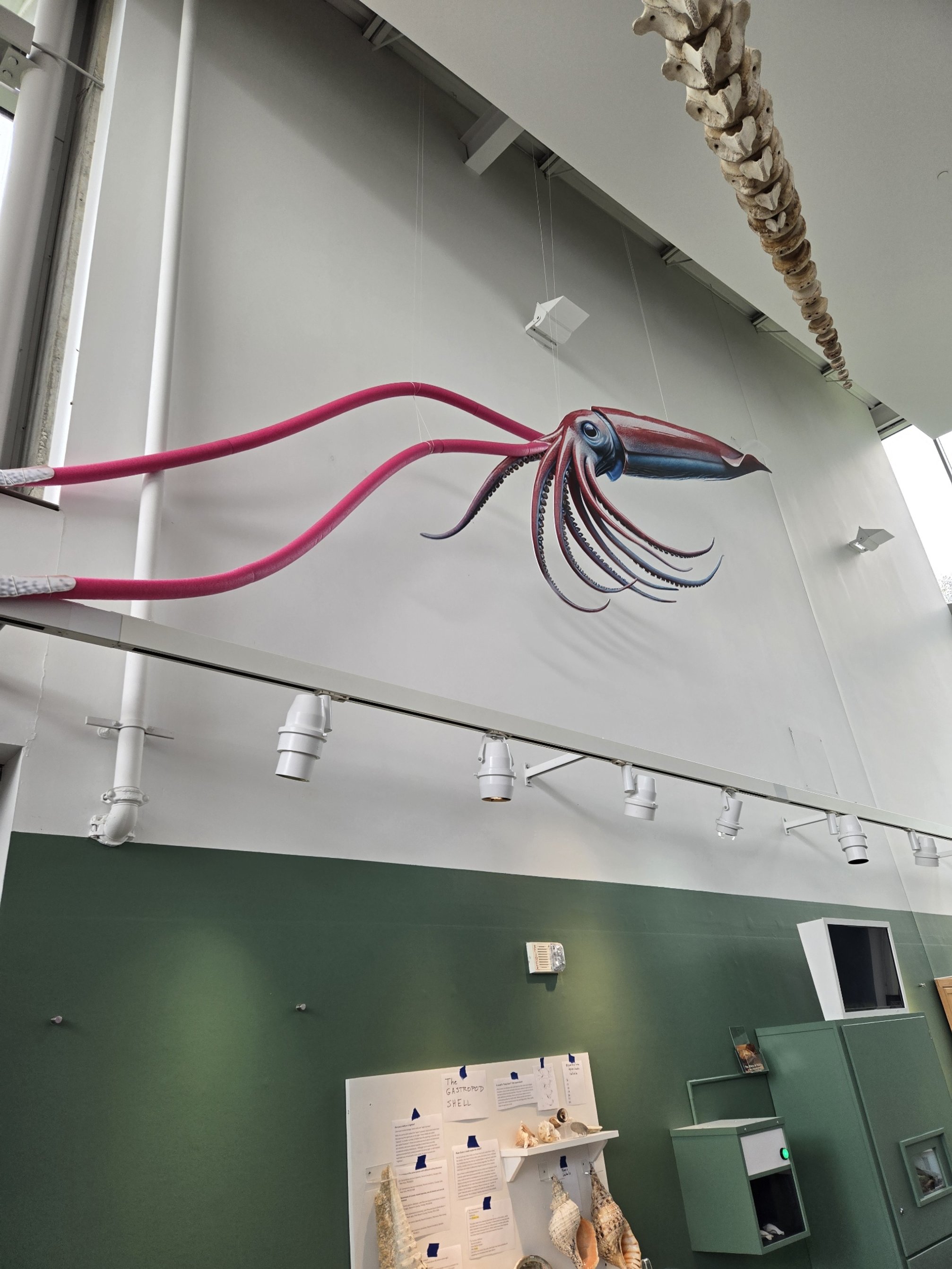
The giant squid wall decal as placed in exhibit.
Style with substance
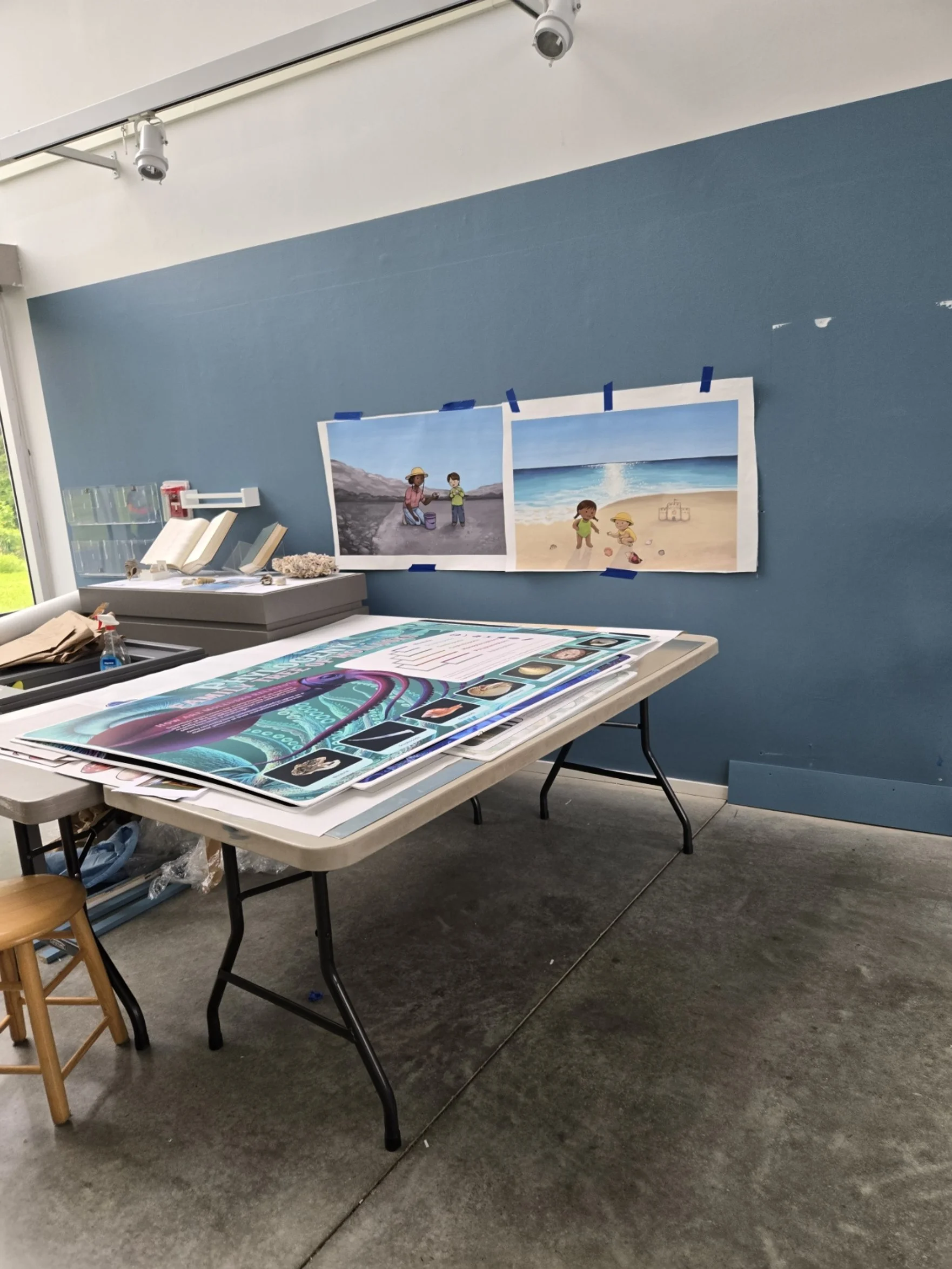
The overall appeal of an exhibit, consistent style, and the layout of exhibit components, didactics (teaching text and images), are all critical to an exhibits success as a tool of scientific communication. Most museums do not have in-house artists/graphic designers and therefore hire and collaborate with individuals or firms who have these skills and talents. For this exhibit, we collaborated with Wendy Marvel, a local handcraft and digital artist, to help organize the color palette, graphics, and didactics. (Wendy also provided excellent feedback on the accessibility of our text, given that our science team was at the special disadvantage of being mostly malacologists – it is always important to know what actually is common knowledge vs. what 4 people who all study snails and clams might think is common knowledge). We also worked with Franz Anthony, a paleoartist with whom I collaborated on a series of snail infographics, who provided vivid life-like reconstructions of how some extinct species would have looked when they were alive. A life-sized giant squid wall decal with 3 dimensional tentacles, and a life-sized giant orthocone, and a nearly life-sized giant ammonite rounded out our realistic art projects. Wendy Marvel’s team also produced scientifically accurate but cartoonified versions of a variety of mollusks for a children’s activity where animals can be matched to their habitats. Graphic designers and artists are also responsible for the advertisements that will let people know about your upcoming or recently launched exhibit – you can’t communicate your science if no one knows your exhibit is available.
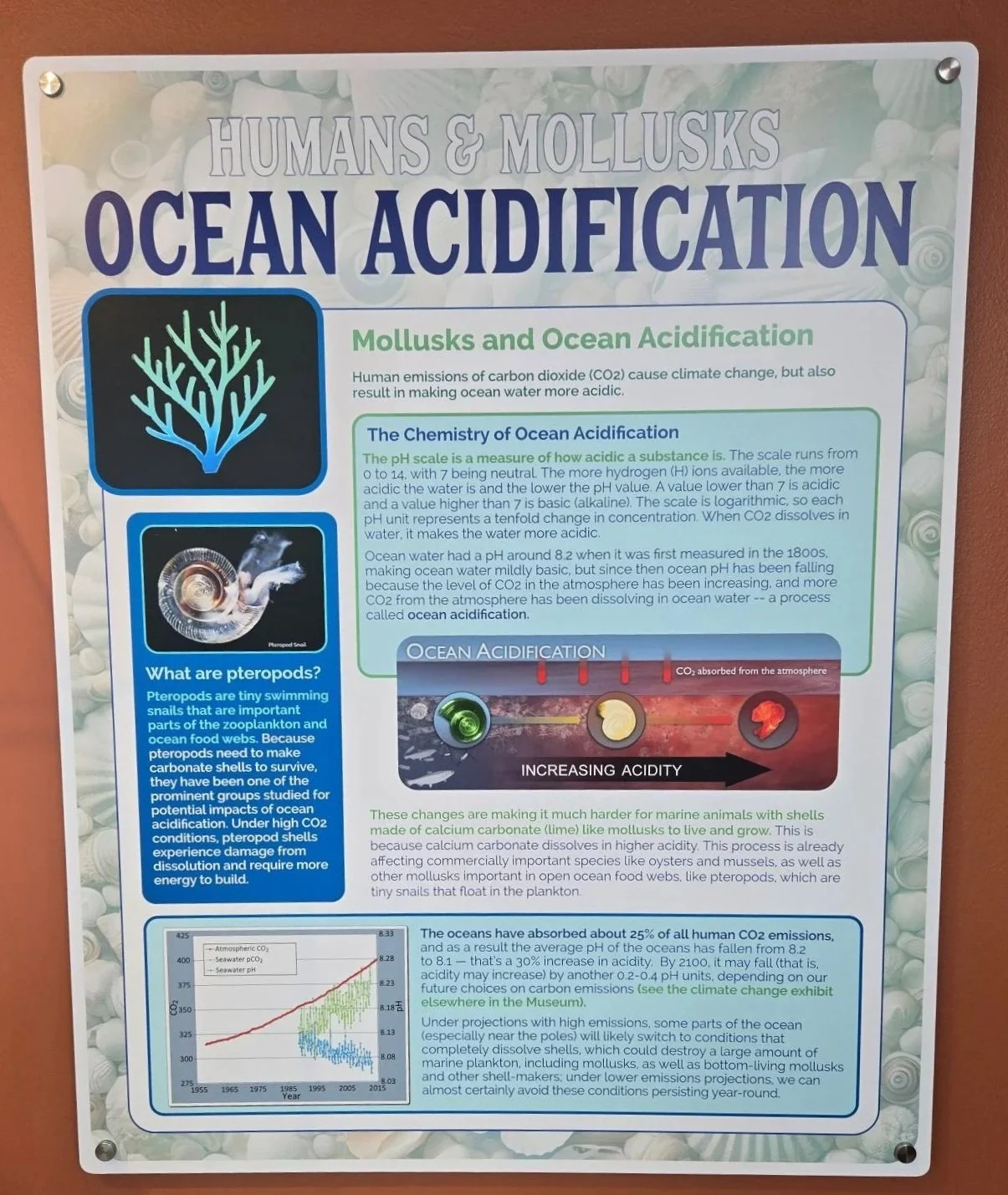
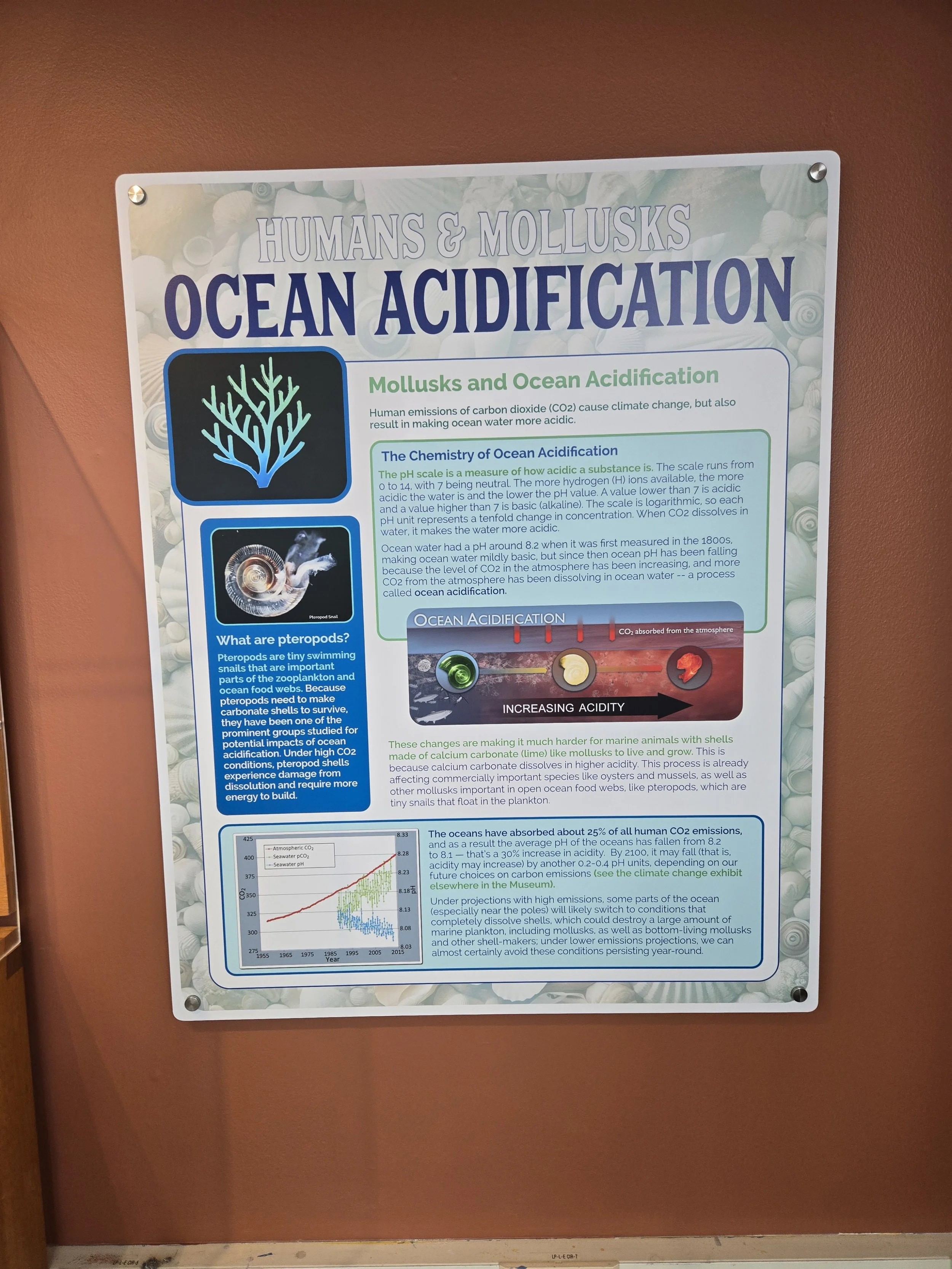
This sign focuses on ocean acidification and its impact on mollusks. The content and design was reviewed by an education team to ensure that it is understandable to a broader audience.
Teaching when you aren’t there - Writing Didactics
Did you start reading here? The number one lesson of museum exhibits is that there is no guarantee anyone reads any part of the exhibit, and certainly not in any particular order. Where a particular object or image attracts attention it may be the first place visitors go, but without any additional guidance or the lure of an open door or high visibility object, most visitors will turn to the right (Bitgood, 1988). This means that every piece of text that is part of an exhibit (the didactics, “teaching texts”) needs to be written to stand on its own.
Writing exhibit text starts with selecting themes and communications objectives you have for each section, and then allocating these across the spaces in the exhibit that can actually host the text. Inevitably this is the first stage where text is cut. Not every topic makes it into the final arrangement of the exhibit. Once panel topics are chosen, the science team writes the text for certain panels, then it is passed to another member of the science team to check for accuracy. After this, it goes to members of the education team who evaluate the text for readability, jargon, and potential science communication issues or areas where the scientific team may be misunderstood or have failed to consider audience needs. Next, the text and accompanying graphics are laid out by the design team. The design team helps ensure that text is broken into readable chunks and that the signs are visually appealing.
This is the stage where everyone will inevitably realize that they have written too much! As we select particular parts of each story to tell in small segments, large portions of text are removed or rewritten. These smaller segments are once again cross-evaluated by the science team to make sure that text reductions have not resulted in scientific or other errors. Luckily in our case, we can save many of our precious sentences by expanding the didactics in the online exhibit, and providing QR codes if visitors would like to learn more about a particular subject.
Accessibility
Throughout the design of the exhibit care should be taken to ensure that as wide a possible segment of the population can enjoy and benefit from the information presented. This includes making sure that text is large enough to be read easily, text for both the physical and online exhibits that translates well into audio description or screen reading software and using alt-text for graphics that adequately describe any images presented. Having an online component allows wider access to the exhibit, but care is also taken to ensure that the physical space is accessible. After completing the draft layout staff ensure that our wheelchairs have enough clearance to move among the cases and didactic panels without difficulty, and that didactics within or behind cases can all be read from wheelchair height. The museum also tries to ensure that it is welcoming to all members of the community by having designated days where all staff and patrons are required to mask, designated sensory friendly days (a sensory friendly space and headphones are always available), and days when admissions are “pay what you can” so there are not financial barriers to attendance.
Conclusions
“Marvelous Mollusks: The Secret World of Shells” Opened on June 6th, and will remain on exhibit in person throughout the year, and online in perpetuity. I very much enjoyed working on this project from concept to opening and hope that it brings a broader appreciation to our shelly friends and an awareness of things that endanger them such as overharvesting, ocean acidification and climate change. Communication when you are not present to interact poses unique challenges, but people love getting to see and interact with real 3-D objects. Many scientists, myself included, were inspired by visits to museums, aquariums, planetariums, zoos, and other science centers at a young age, and I am privileged to have gotten the chance to pay this forward for a new generation.
The online exhibit that accompanies the in-person exhibit at the Museum of the Earth can be found here: https://www.museumoftheearth.org/marvelous-mollusks
If you would like to support the Museum of the Earth or the Paleontological Research Institution please visit https://www.priweb.org/donate
References
Bitgood, S. 1988F. Problems in visitor orientation and circulation. Visitor Studies: Theory, Research & Practice. Jacksonville, AL: Psychology Institute of Jacksonville State University, 155-170.
Bray, B., France, B., & Gilbert, J. K. 2012. Identifying the essential elements of effective science communication: What do the experts say?. International Journal of Science Education, Part B, 2(1), 23-41.
Merritt, E. 2019. TrendsWatch 2019:Truth, Trust, and Fake News
https://www.aam-us.org/2019/04/17/trendswatch-2019-truth-trust-and-fake-news/
Merritt, E. 2021. Exploring Museums and Trust 2021 https://www.aam-us.org/2021/10/05/exploring-museums-and-trust-2021/
Ortega, R. P. 2025. Financial peril could doom a famed New York paleontological institute. Science doi: 10.1126/science.zd39s7d
Rosenberg, Gary (2014). A new critical estimate of named species-level diversity of the recent mollusca. American Malacological Bulletin. 32 (2): 308–322.
Photo Gallery - From the initial design to the final exhibit