Ithaca Darwin Days at 20
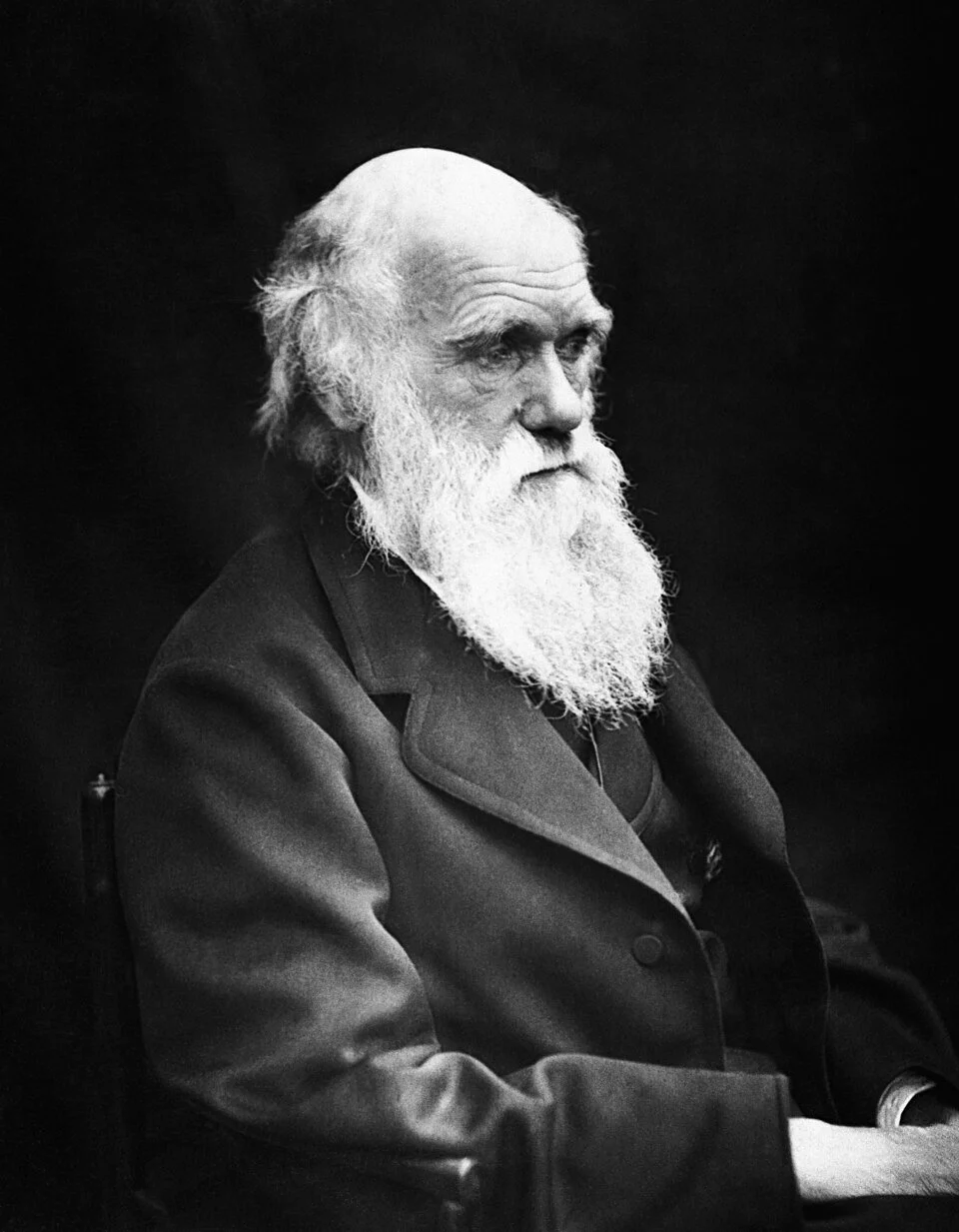
Charles Darwin (1809–1882) in his later years
By Warren Allmon and Robert Ross
Charles Darwin was born on February 12, 1809. His birthday, known popularly as Darwin Day, is an annual celebration of the man and his ideas. The first organized Darwin Day event in modern times apparently took place in 1995 in Palo Alto, California. The years since have seen Darwin Day observances around the world (see https://darwinday.org/).
In February 2006, the Paleontological Research Institution (PRI), in collaboration with Cornell University and Ithaca College, organized the first official Darwin Day celebration in Ithaca, New York. The main impetus for the timing of this celebration was the just-concluded Dover Intelligent Design Trial. In December 2005, Federal Judge John Jones ruled that attempts to teach creationism in public schools in Dover, Pennsylvania were unconstitutional. It may seem somewhat quaint now, given the extraordinary challenges currently faced by scientists and educators in the U.S., but the trial received intense public attention across the country, and enormous media coverage (the issue even made it into the story line of the popular TV show West Wing). Cornell Interim President Hunter Rawlings made it the topic of his State of the University address in October 2005, which itself received national coverage. Judge Jones’ lengthy opinion was an eloquent denunciation of the logic and tactics used by creationists in Dover. After the trial was over, he even took the unusual step of writing and speaking publicly about how important he thought the issue was and the reasoning for his ruling.
The 2006 event was so successful, that we decided to keep doing it. Now, 20 years later, Ithaca Darwin Days events have been attended by more than 8,000 people, and we are a fixture on the national list of celebrations. For a number of years, funding provided by Cornell and several individual donors allowed us to invite prominent speakers from out of town and even (for the first 3 years) produce small hard-copy books with transcripts and other content. From the start, we tried to integrate the Cornell community (and, to a lesser extent, that of Ithaca College) as well as the wider Ithaca community, by holding events at PRI, at Cornell, and in downtown Ithaca, and we tried to appeal to Ithaca’s varied audiences, from professional evolutionary biologists to families with children. In most years we had a theme, which guided the selection of speakers and panelists, but we also had general evolution-themed events such as film screenings and trivia contests. In several years, we tied the events to temporary exhibits that were at PRI’s Museum of the Earth. Our most ambitious effort came in 2009, which marked the bicentennial of Darwin’s birth and sesquicentennial of publication of On the Origin of Species, with paired exhibits at the Museum and the Cornell Library and events throughout the year.
As part of this year’s celebration, this blog post provides some highlights of each of the 20 years of Ithaca Darwin Days, and some thoughts about its significance and future.
2006
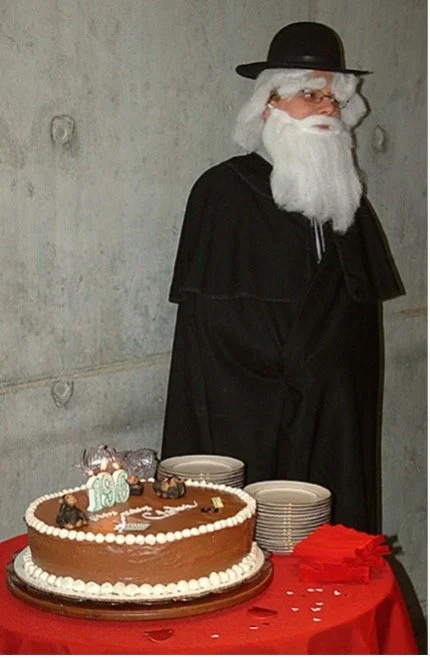
Cornell graduate student Jonathan Hendricks dressed up as Charles Darwin for our 2005 party in the Museum. Jon is now a curator of paleontology at the Milwaukee Public Museum.
We held a small Darwin’s Birthday party in the Museum of the Earth in 2005, but 2006 was our first community-wide, multi-day celebration. The 2006 events took place over five days and were cosponsored by PRI, the Cornell University Provost’s office, Cornell United Religious Work, and the Biology Department at Ithaca College. More than 700 people from Cornell, Ithaca College, and the broader Ithaca community participated in a range of panel discussions, film screenings, and other events. A small book, Darwin at Cornell 2006, containing transcripts of two of the panel discussions, as well as two speeches on the subject of evolution and intelligent design given by Cornell’s interim president Hunter Rawlings, provided an attractive archive of the events.
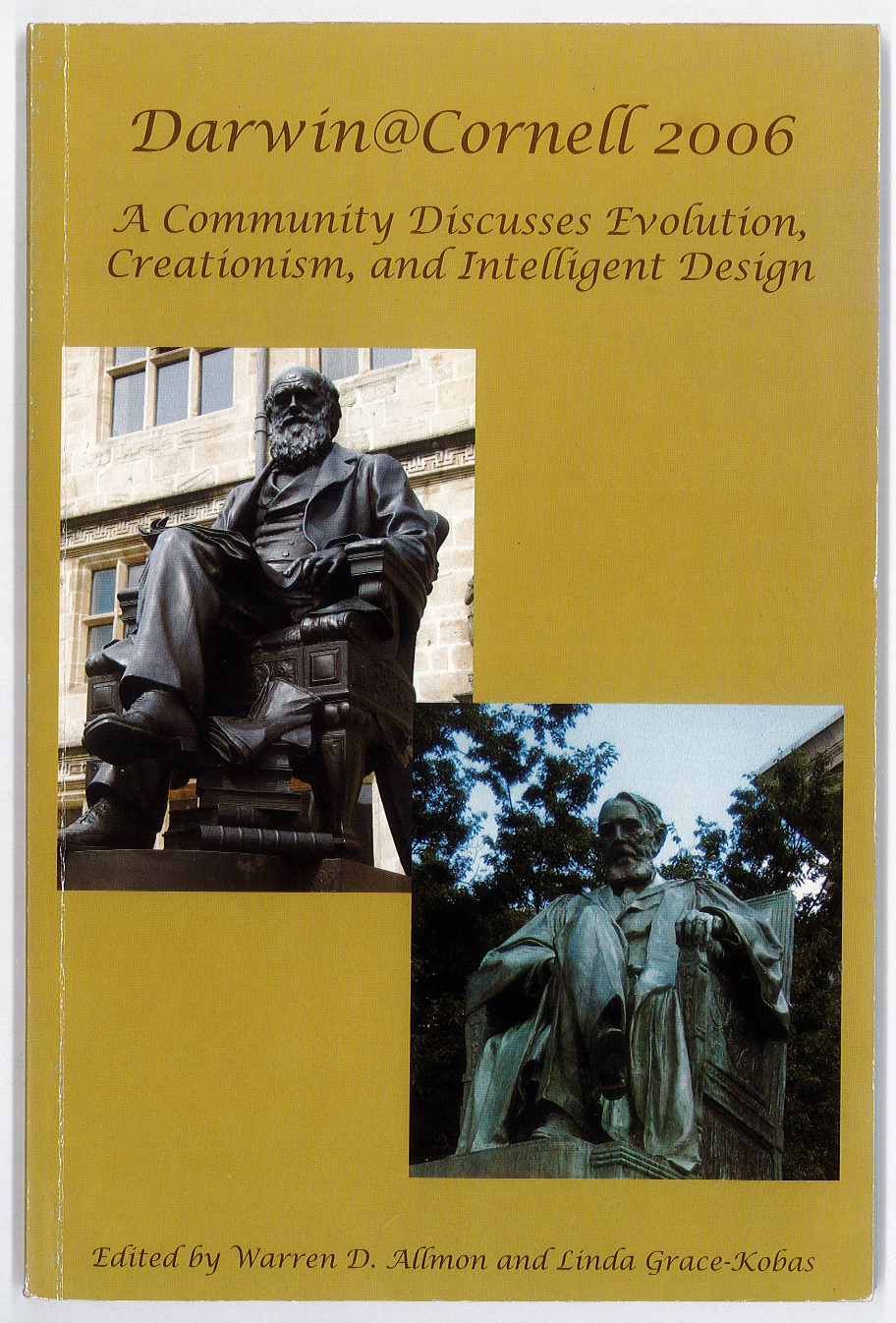
Front cover of Darwin at Cornell 2006
Aside from marketing collateral contributed by Cornell’s communications office, all costs for the weekend’s events were covered by PRI, which received a gift for this purpose from Stephan Lowentheil (Cornell Law ’75), who continued to support the project for several more years. The schedule began on February 9 with a panel discussion at the Museum of the Earth entitled “Where Do We Go from Here: The Future of Darwinism in American Society” moderated by Cornell Provost Carolyn “Biddy” Martin.
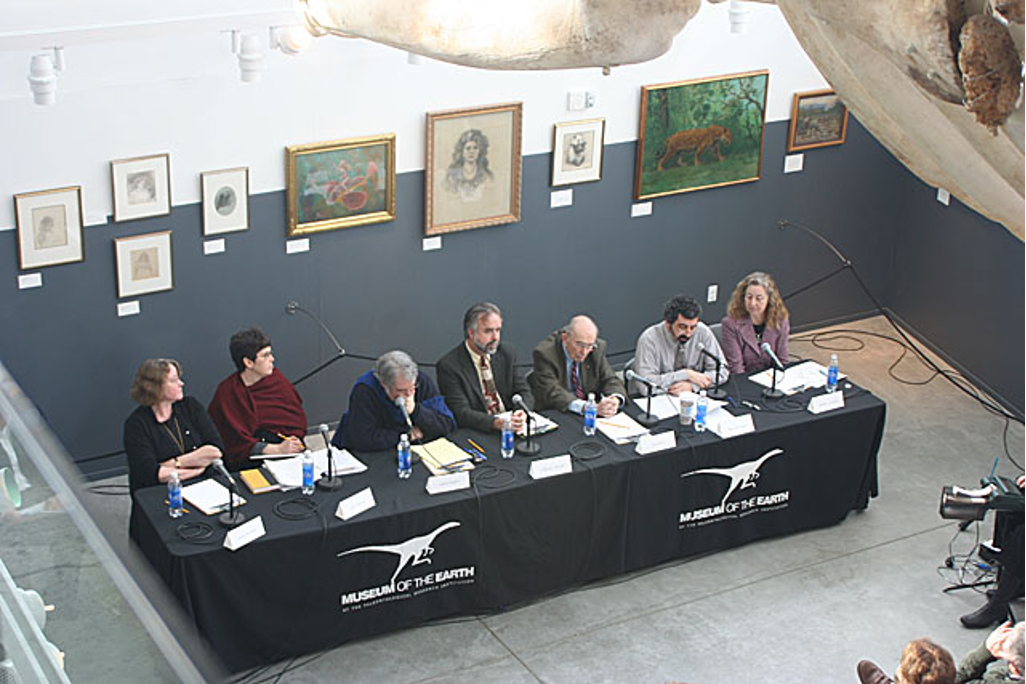
Panelists at the Museum of the Earth on Feb. 9 were Cornell faculty members Barbara Crawford, Thomas Eisner, Bruce Lewenstein, and Steven Shiffrin; visiting Darwin scholar Sheila Ann Dean; Janet Shortall, associate director of Cornell United Religious Work; and William C. Russell, head of curriculum development for the Ithaca City School District.
The following day another panel discussion on “Evolutionary Biology: Present and Future” was held at Cornell, and there was a screening of the classic 1960 film “Inherit the Wind”, which is based on the 1925 Scopes “Monkey Trial”. On February 11, activities for families and teachers around the theme of evolution were held at the Museum (our first “Family Day”), as well as a reception and birthday party for Museum members. On February 12, filmmaker and evolutionary biologist Randy Olson hosted a screening on the Cornell campus of his documentary film “Flock of Dodos: The Evolution-Intelligent Design Circus”, about the current state of the evolution-creationism debate. The showing was followed by a lively audience discussion that Olson later described as “the best of all five screenings” that he had previously done, with “the smartest, most focused group of people.” Finally, on February 13, a panel discussion about evolution was held at Ithaca College.
2007
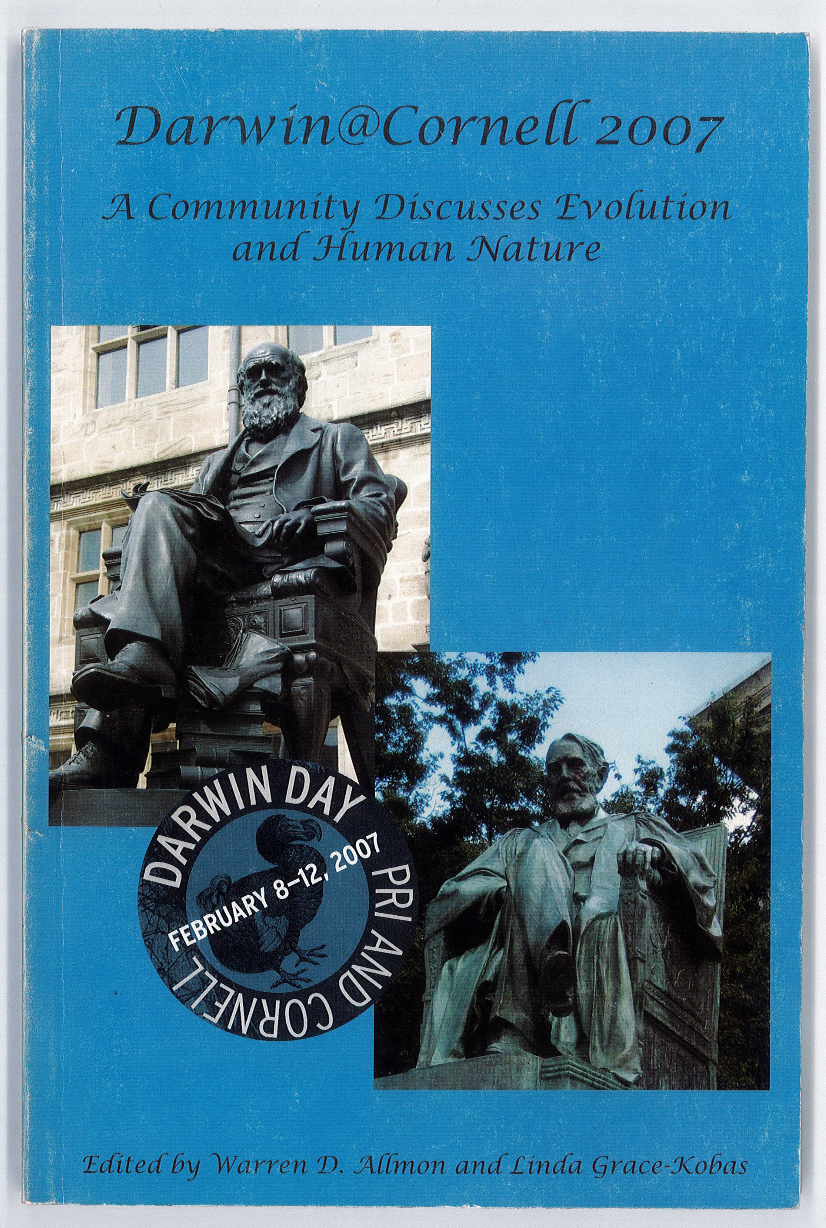
The theme of the celebration was “Evolution and human nature”, and a wide range of events explored how the idea of evolution in general, and the Darwinian mechanism of natural selection in particular, apply to what it means to be human and to our everyday lives. We had three panel discussions. The first took up the theme “Why evolution is science” with Sheila Dean, Laurel Southerd, Myra Shulman, Rick Harrison, and Will Provine, all from Cornell. The second considered “Evolutionary Psychology” and included Wendy Jones, Allen MacNeill, Will Provine, and Kern Reeve from Cornell and Lisa Paciulli from Ithaca College. The third discussed “Evolution, Eugenics, and Beyond”, with Warren, Will Provine and Allen MacNeill from Cornell, and Brian Kaviar, a recent Cornell graduate who had written his senior thesis on eugenics in America. Professor David Sloan Wilson of Binghamton University gave the keynote lecture, entitled “Evolution for Everyone: How Darwin’s Theory Can Change the Way We Think About Our Lives”. There was also a reading at the Museum of the Earth by members of the cast of the play “Inherit the Wind” which was later performed at Cornell’s Schwartz Center Apr 26 –May 5. Family Day at the Museum offered activities for children and a lecture by PRI’s Artist-in-Residence John Gurche on, “What the Fossil Record Can Tell Us About Human Nature”, The documentary film “Flock of Dodos” was screened at Cornell Cinema, and a birthday party at the Museum featured a performance of “Darwin Live” by educator and author Richard Milner. A workshop for teachers, co-sponsored by Tompkins-Seneca-Tioga BOCES also at the Museum, advised K-12 teachers how to approach the topic of evolution in the classroom.
More than 500 people attended these events during the week. Thanks again to generous support from Cornell and several individual donors, we produced another book with transcripts and other essays.
As was true during most of the early years, the events were well covered by Cornell and other Ithaca media: e.g., https://news.cornell.edu/stories/2007/02/evolution-given-closer-look-second-darwin-day-celebration
2008
The theme was “Evolution and Environment” and events included a panel discussion entitled “Are we changing evolution?” with PRI’s Curator of Cenozoic Invertebrates Greg Dietl, Lisa Paciulli from Ithaca College, and Nelson Hariston and David Winkler from Cornell. There were two talks to large audiences at Cornell by Richard Harrison from Cornell (“Evolutionary Biology in the 21st Century: What would Darwin Think?”) and by Lynn Margulis from the University of Massachusetts Amherst (“Darwin’s truths and symbiogenesis”). Warren gave a talk at the Museum entitled “Why Darwin Still Matters”. In his talk, Rick Harrison said “The history of science is populated by individuals, but few have become the single image and single figure that dominates a specific field of science in the way that Darwin has.” When Harrison opened the lecture to questions, creationism came up quickly. Harrison commented that the rise of creationism was due to the failure of the academic community to educate the rest of America on their fact-based findings. “We have failed miserably to educate the rest of America about evolutionary biology. Maybe because we have been so busy furthering our research we have not taken the necessary time with the rest of society.” There was also a panel discussion at Cornell on “Genetically modified organisms and evolution” with John Losey, Ray Wu, and Clifford Kraft from Cornell and David Stern from the Boyce Thompson Institute of Plant Biology.
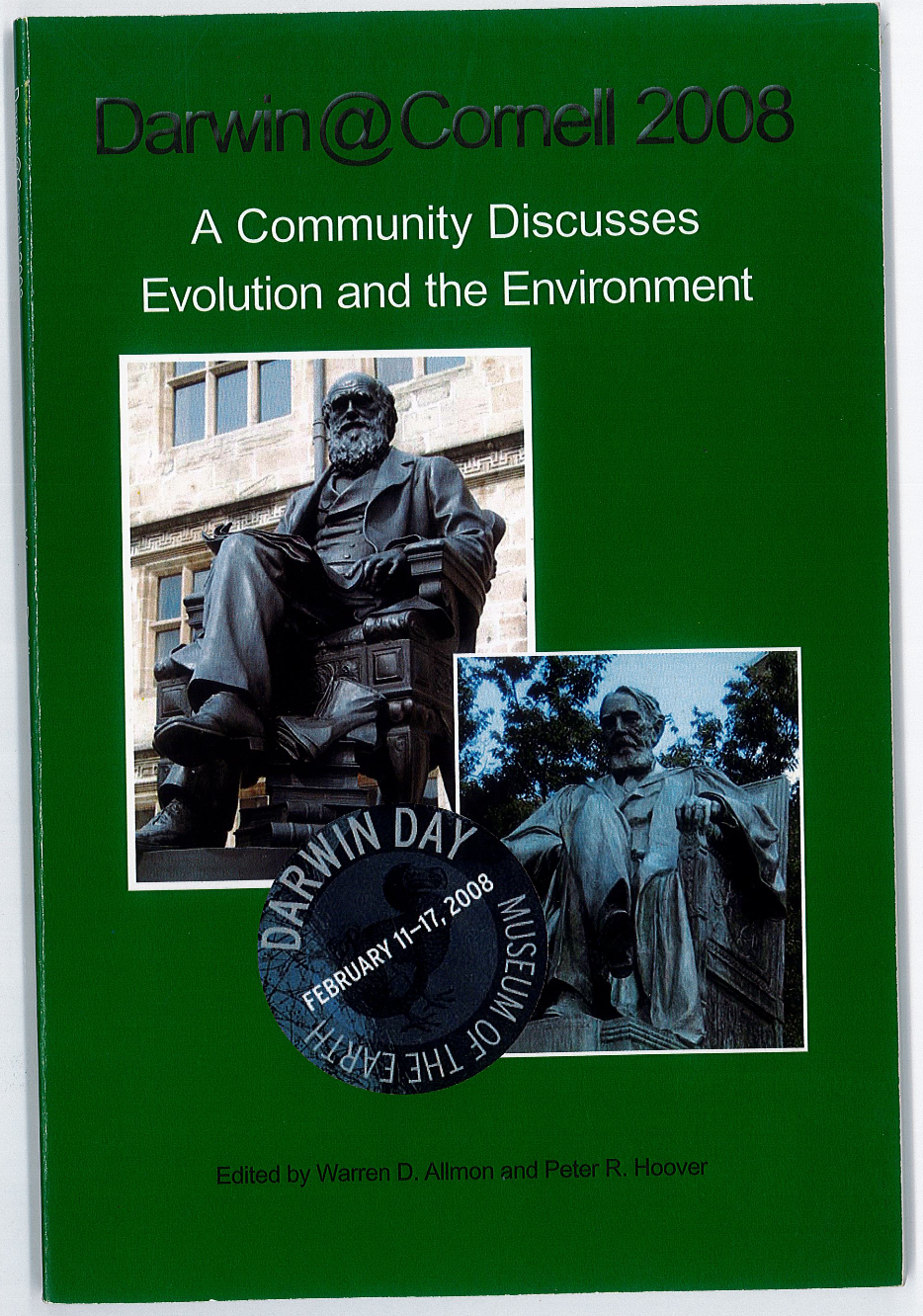
Another highlight was a talk in downtown Ithaca by Ann Druyan, who with her late husband Carl Sagan co-authored the Cosmos TV series, entitled “The Menschlekeit of Charles Darwin” (Yiddish for the good-heartedness or good character of Charles Darwin). The climax of the week was a performance at Cornell of “Re:Design”, a dramatization of letters between Charles Darwin and Harvard botanist Asa Gray, who is widely credited with promoting Darwin’s theories in North America. The letters were read by British actor Terry Molloy as Darwin and American actor Patrick Morris as Gray. “Re:Design” was commissioned by the Darwin Correspondence project at Cambridge University, and the performance was arranged by local Darwin scholar Sheila Dean who at the time worked at Cornell as part of the Correspondence project. About 525 people attended the week’s events. Support from Cornell and several donors again allowed us to produce a printed book with highlights.
2009
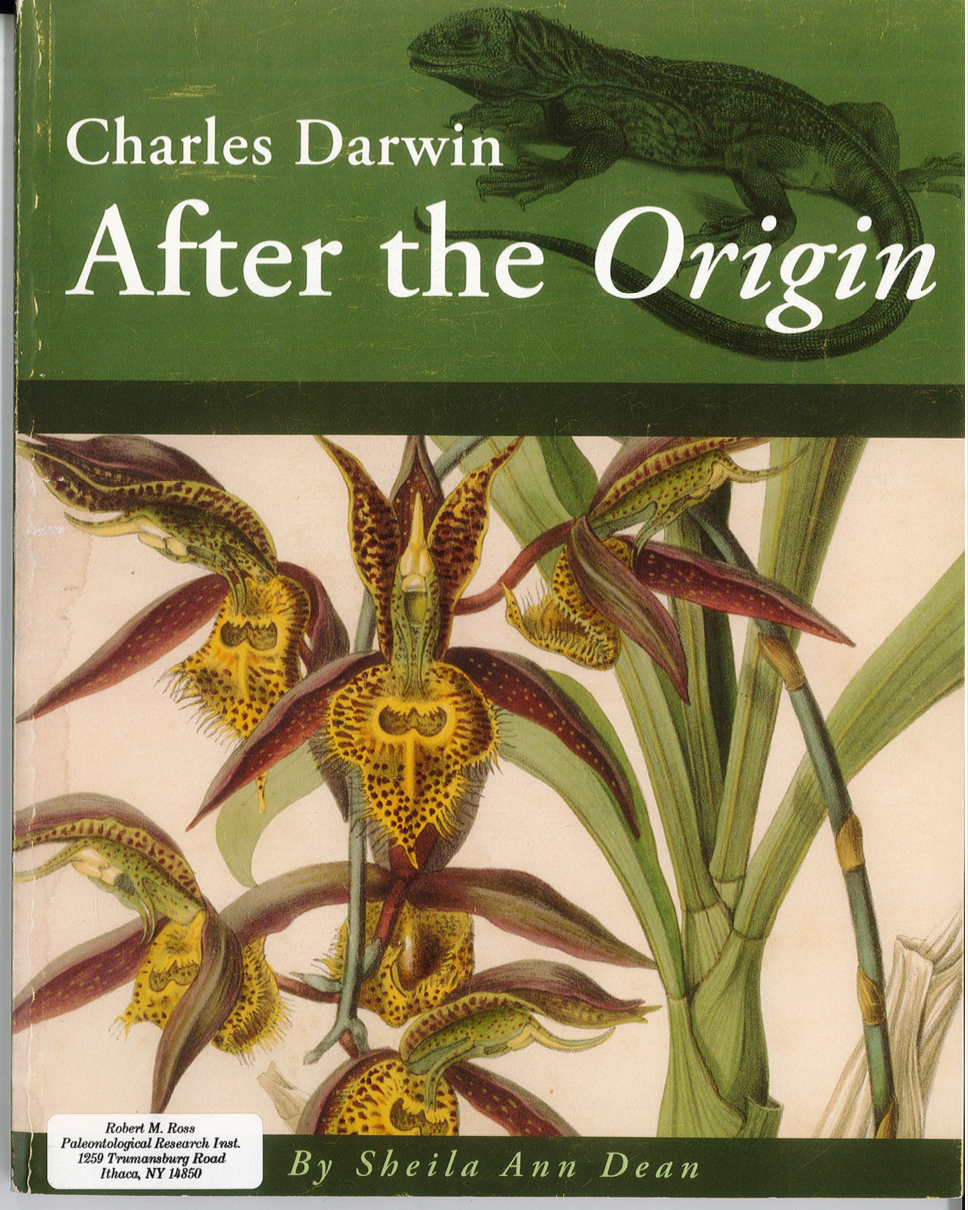
This year marked not only the 200 th anniversary of Darwin’s birth but also the 150th anniversary of the publication of his book On the Origin of Species (November 24). Consequently, there were hundreds if not thousands of events held around the world. In Ithaca, we celebrated this special year with multiple events built around the theme “Charles Darwin: After the Origin”. The Museum of the Earth and the Division of Rare and Manuscript Collections at Cornell’s Kroch Library developed a collaborative exhibition under the guidance of Shelia Dean. Both venues explored Darwin’s life and work in the twenty-two years following the publication of the Origin of Species in 1859. The exhibition was accompanied by a book written mostly by Sheila and edited and published by PRI.
The exhibit at the Museum featured a treatment of the topics of all of the books Darwin published in the two decades after the Origin, including a mockup of his greenhouse in which he did botanical experiments.
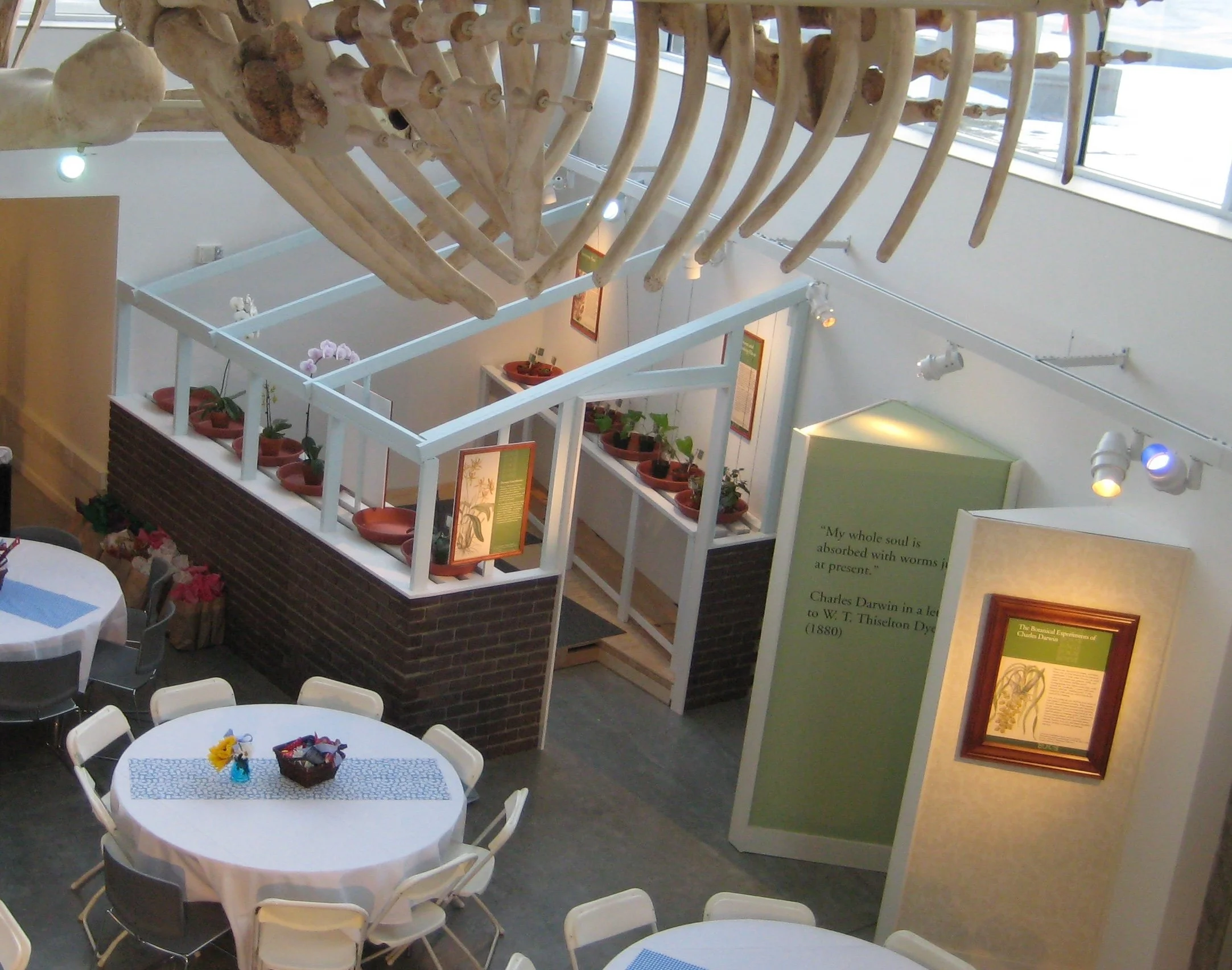
Darwin Days 2009 mockup of Darwin’s greenhouse
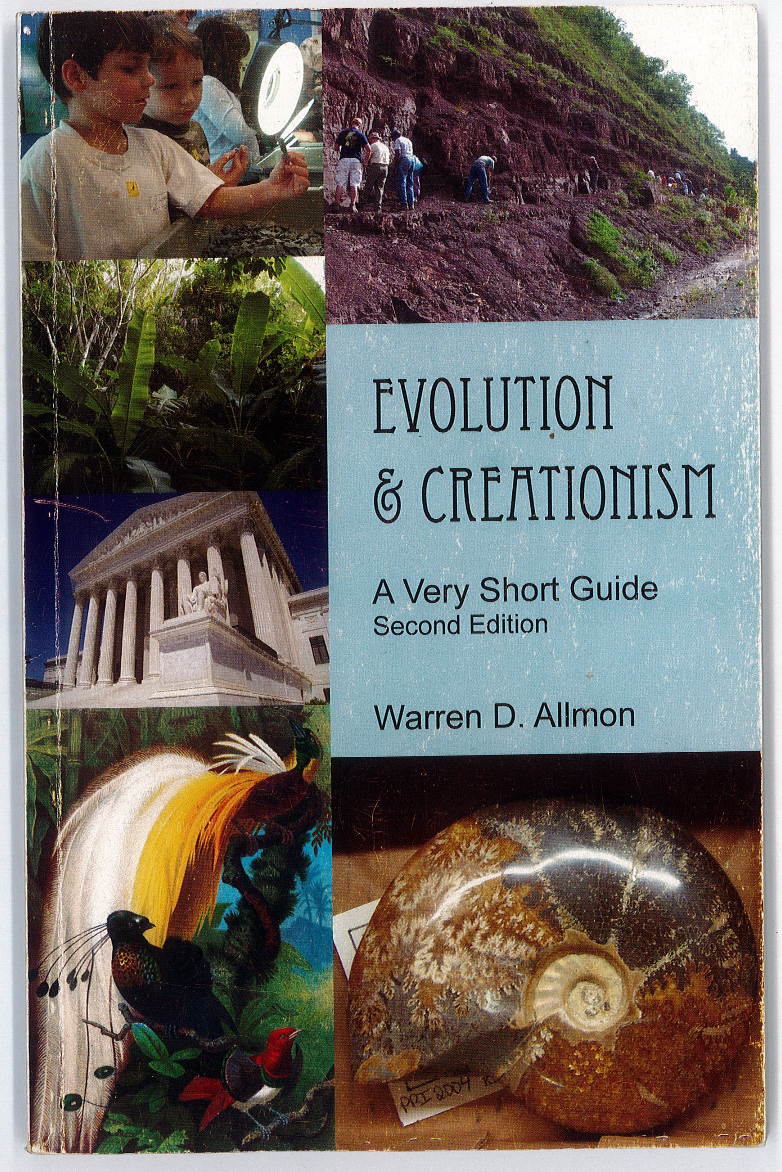
The exhibit at Cornell featured copies of many of Darwin’s books from Cornell’s outstanding rare book collection, including many first editions. Our Family Day in the Museum included other community organizations, including the Cornell Department of Astronomy, the Rosamond Gifford Zoo in Syracuse, and the Cayuga Nature Center. Other highlights included outstanding and well-attended talks by Massimo Pigliucci from City University of New York, Cornell President Emeritus and Darwin scholar Frank Rhodes (available here), Cornell Near Eastern Studies professor Ross Brann, and Cornell graduate and Florida high school biology teacher David Campbell, which itself was introduced by Cornell President Emeritus Hunter Rawlings. More than 500 people attended the week’s events. We continued the celebration and exhibits after February with publication of a revised and expanded version of Warren’s short book Evolution and Creationism: A Very Short Guide, and in November with a talk at Cornell by Darwin biographer Janet Browne.
2010
Our fifth “Ithaca Darwin Days” was somewhat scaled back compared with the 2009 bicentennial-sesquicentennial extravaganza. We focused on Cornell University researchers working on various aspects of evolution, highlighting the evolution of biodiversity on land and sea. This complemented the temporary exhibit then in the Museum, “One Fish, Two Fish, Old Fish, New Fish,” which explored how new species arise. (That exhibit was made possible through a grant from the National Science Foundation to Cornell evolutionary biologist Rick Harrison.) Our keynote speaker was invertebrate paleontologist Doug Erwin from the Smithsonian’s National Museum of Natural History. Participation for the week was significantly lower than previous years. At the end of the year, however, components from the exhibit were featured at the Erie County Public Library in Buffalo, and PRI staff also contributed to an exhibit in Italy called “Darwin and 200 Years of Evolution in Modena”.
2011
Our theme was “Darwin and domestication”. Given the importance of agriculture at Cornell, it was perhaps not surprising that this was one of our most well-attended Darwin Day celebrations, with more than 600 people participating. The week began with a wine tasting and talk at the Museum by Christopher Owens from Cornell on, “Ancient Wines to Modern Vines: The Story of Grape Domestication”. There were panel discussions and lectures on crops, pests and pollinators; Darwin, birds and perceptions about evolution; and crop and barnyard animal domestication. Renowned Cornell Emeritus Professor of Veterinary Anatomy Howard Evans talked on dog domestication, and the keynote speaker was fossil horse expert Bruce McFadden (Cornell ’71) from the Florida Museum of Natural History, who gave a great talk on the evolution of horses.
2012
Our theme was “Evolution and Climate Change”. Provocative lectures, panels, a beer tasting, costume party, and family day brought out an estimated 640 attendees. Distinguished conservation biologist Thomas Lovejoy and paleoclimatologist Thomas Cronin of the U.S. Geological Survey gave talks on the past, present, and future of climate change and its effects on evolution to large audiences at Cornell. Two panels shared their viewpoints on genetically modified crops, pest control, and selective breeding to standing-room-only audiences. We introduced a Darwin trivia contest this year, which went on to be one of our most consistently popular events in future years. We filled the Big Red Barn at Cornell with a talk by a specialist in growing hops in New York State and a beer tasting courtesy of Saranac Brewery. A couple of nights later we were back at the same venue for “Adapt Your Tail Off! Darwin’s Birthday Party and Costume Contest.” Party goers who didn’t come in costume donned masks and tails at the door or had a balloon artist craft them a costume. The week closed with Family Day at the Museum featuring activities about invasive species.
2013
Slugs, starlings, and many other invasive animal and plant species not native to New York can cause enormous environmental and economic damage. The theme this year – “Evolution and Invasive Species” – considered what such invasions mean for evolution, and what the study of evolution can tell us that might help mitigate or prevent the damage invasive species cause. Events included a keynote lecture, “Invasive species, fossils, and evolution”, on February 11 by paleontologist Alycia Stigall of Ohio University and another lecture by Allen MacNeill on February 14, “Can cooperation evolve by natural selection?”. We had three panel discussions: on terrestrial invasives (February 11), on aquatic invasives (February 12), and on invasives in the fossil record (February 15).We also had trivia night at the Big Red Barn, and family day at the Cayuga Nature Center (which had just become part of PRI) titled “Invasion of the Evolving Invasives”. The lecture and panels were very interesting and stimulating, but total attendance for the week was markedly lower than previous years, with around 250 participants.
2014
The theme was “Evolution and the Fossil Record”. On Saturday, February 8, Family Day at the Museum included a presentation on modern turtles vs. fossilized turtles and their evolution and a scavenger hunt prompting visitors to explore how evolution related to specimens in the permanent exhibits. On February 9 the new and controversial feature film “Creation” was shown at Cinemapolis, Ithaca’s member-supported art-house theater, with a talkback afterward that Warren moderated. On February 10 we hosted a screening of “Jurassic Park” at Cornell, with PRI’s Artist-in-Residence John Gurche giving a brief introductory talk about his work as a consultant on the film. On February 11, Rob gave a talk in the Ithaca Science Cabaret series about mass extinction, and there was Trivia Night at Cornell. The next day there was a panel discussion at Cornell with PRI staff and Cornell faculty on using fossils to teach evolution. On February 13 Warren gave the keynote talk at Cornell on “Darwin and Paleontology”. Attendance was again relatively low for the second year in a row.
2015
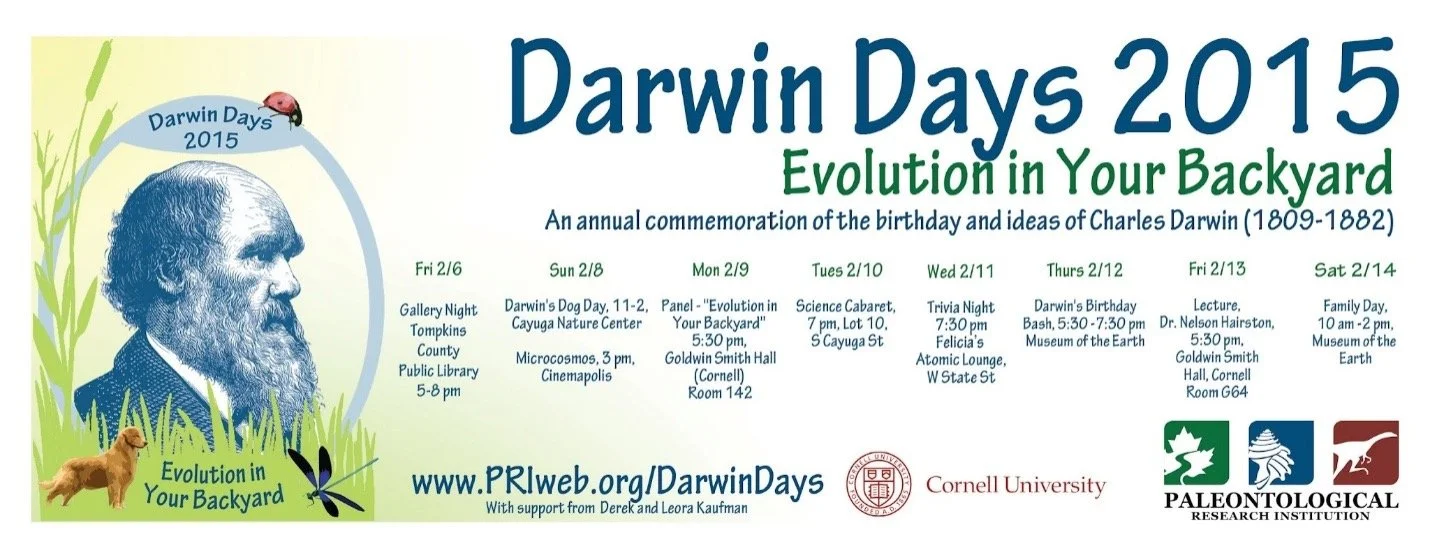
The theme was “Evolution in your backyard”. On February 6, PRI collaborated with Tompkins County Public Library to display a small exhibit centered on Darwin’s emphasis on evidence of evolution all around us, from birds to mammals, and plants to insects. On February 8, the event “Darwin’s Dog Days” was held at the Cayuga Nature Center. Visitors could learn about modern dog anatomy and nutrition, and try their hand at drawing dogs. That evening at Cinemapolis, we hosted a screening of Claude Nuridsany and Marie Pérennou’s film “Microcosmos”, a groundbreaking view into the insect life in meadows and ponds. On February 9, a panel discussion featured Cornell professors Cole Gilbert, Jeremy Searle and Willy Bemis, and postdoc Brooks Miner talking about how evolution shapes animals and plants in our local surroundings. On February 10, Warren gave an Ithaca Science Cabaret talk, “Evolution in Your Backyard,” on how you can see evolution everywhere. On February 13, Nelson Hairston from Cornell talked on “Rapid Adaptation to Changing Environments: How Plausible is ‘Evolutionary Rescue’ From Extinction?” Darwin Trivia Night returned at the popular local bar Felicia’s Atomic Lounge. On the evening of February 12 we had a birthday party at the Museum featuring live music, the temporary exhibit “Quirks of Nature: The Comics of Rosemary Mosco,” wine, snacks, and birthday cake. And David Sloan Wilson from Binghamton once again gave our keynote lecture. Despite terrible weather during the week, about 270 people came to all events.
2016
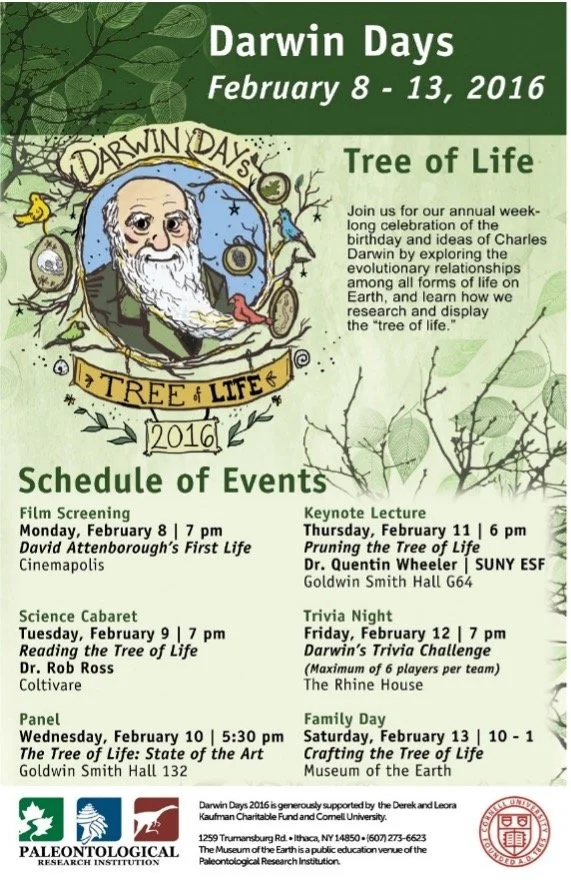
Our theme was “The tree of life”, in which we sought to explore the evolutionary relationship between all forms of life on Earth. On February 8 we hosted a screening of David Attenborough’s film “First Life” at Cinemapolis in downtown Ithaca. On February 9, Rob gave a talk on “Reading the Tree of Life” at Science Cabaret. The following night at Cornell we hosted a panel discussion on the state of the art of constructing a total tree of life. On February 11 our keynote speaker was entomologist Quentin Wheeler from SUNY College of Environmental Science and Forestry in Syracuse, who talked on the effects of extinction in “Pruning the Tree of Life”. On February 12 we hosted our usual trivia contest, this time at a different local haunt, The Rhine House, and we hosted our usual Family Day at the Museum on February 13. Altogether we counted 327 attendees for the week.
2017
Our theme was “Exploring Human Origins”, intended to complement a human evolution exhibit that PRI had helped bring to the Tompkins County Public Library from the Smithsonian. The event series was very well attended, with a total of 430 attendees for the week. Events included a screening of “Inherit the Wind” at Cinemapolis; a panel discussion on the evolution of human sociality with Lisa Corewyn and Jennifer Muller from the Department of Anthropology at Ithaca College, and Tom Volman from the Department of Anthropology at Cornell; a Science Cabaret presentation by Warren about the history of artistic depictions of human evolution; a keynote presentation by Ian Tattersall of the American Museum of Natural History on the origins of human cognition and our usual Darwin trivia night. Family Day at Cayuga Nature Center featured an excellent presentation and demonstration by Sebastien Lacombe of SUNY Binghamton, who spoke about the history of flint-knapping and its cultural significance while demonstrating the techniques and tools used for this endeavor. The presentation was followed by a butchery demonstration given by PRI staff member Matt Sacco. Using the stone tools just created and a fresh deer leg, Matt demonstrated how stone age peoples would have used these incredibly sharp implements to easily and efficiently butcher their meat.
2018
Our theme was “Extreme Life”, and we celebrated with events in downtown Ithaca, at Cornell, and at the Museum of the Earth. A total of 377 people attended. Events included a screening of two films, “Cosmos” and “Life in Hell”, at Cinemapolis ; a panel discussion on the evolution of life in extreme environments in Earths present and past with several Cornell faculty; a keynote presentation by Phoebe Cohen (Assistant Professor of Geosciences at Williams College and a former PRI staff member) on the origins of complex life; trivia night; and Family Day at Museum, at which we exhibited tardigrades (aka “water bears”), which are a model “extreme survivalist” organism, alongside a hands-on exhibit station from Cornell’s Department of Microbiology. Astrobiologist and artist Jack Madden spoke on the topic of exoplanet habitability and identifying factors that influence the possibility of life on other planets. For the first time, the panel discussion, Science Cabaret talk, and keynote talk were all videotaped and made available on PRI’s YouTube channel.
2019
This year’s theme was “Living Fossils”, designed to complement the temporary exhibit of the same title then in the Museum. The week’s events were attended by 385 people. They included a screening of “Jurassic Park” at Cinemapolis in downtown Ithaca, once again with commentary by John Gurche; a Science Cabaret presentation by Professor Willy Bemis from Cornell about coelacanths at the Tompkins County Public Library; a panel discussion on “Living fossils and the world of plants” with Alejandra Gandolfo and William Crepet from Cornell and Elizabeth Hermsen from PRI; a keynote presentation by James Lamsdell from West Virginia University on the evolution of horseshoe crabs; trivia night; and a Family Day at the Museum.
2020
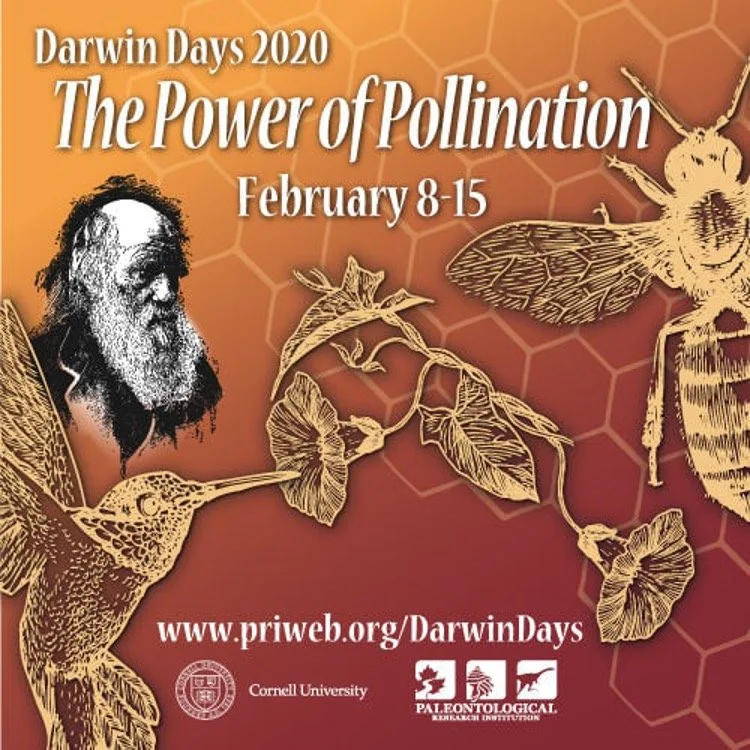
This year’s topic was “The Power of Pollination” which coordinated with the current temporary exhibit in the Museum on bees. The week started with a screening of the stunning film “Wings of Life” on February 8 at Cinemapolis. Cornell professor Robert Raguso led a Conservatory Tour in which he highlighted contrivances that plants use to encourage insects to pollinate them, and then later in the week gave the keynote talk on “Perfumes and Pollinators”. On February 10, there was a panel discussion on the diversity of pollinators, from insects, birds, and bats to people. On February 11 Cornell professor Anurag Agrawal gave a talk on who will be “Pollination and Coevolution: Love Story or Arms Race?” at the Tompkins County Public Library, after which he signed copies of his recent book “Monarchs and Milkweed”. Our ever-popular Trivia Challenge at the Rhine House and Family Day at the Museum rounded out the week, which had a total of more than 420 attendees. Warren started his series of annual Darwin blog posts with one on Darwin and pollination: https://www.priweb.org/blog-post/darwin-pollination-and-evolution
2021
In this first year of celebrating Darwin during Covid, we had a slimmed-down, online-only celebration consisting of two events -- a panel discussion of Cornell faculty and alumnae (on “Women in evolutionary biology”), and a lecture by Warren on “Evolution in the time of COVID and climate change” as part of PRI’s Science in the Virtual Pub series. A total of around 180 attended, which we thought was a decent result under the circumstances. Both videos were posted on YouTube at https://www.priweb.org/science-educationprograms-and-resources/darwin-days
2022
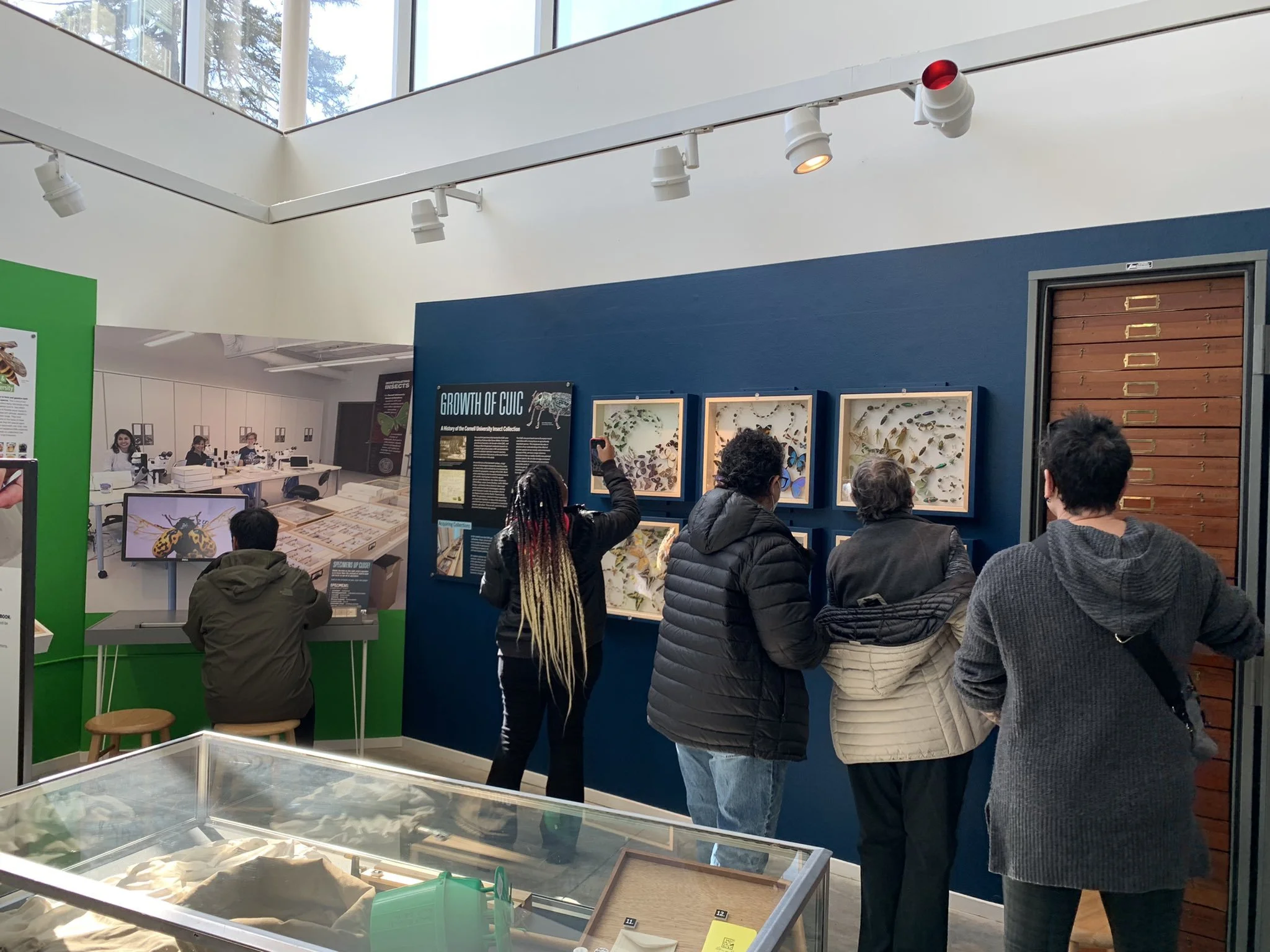
The theme was “Incredible Insects”, exploring entomology and evolution as a preview of the upcoming temporary exhibit in the Museum entitled “Six-Legged Science”. They included two virtual presentations from Cornell University’s Insect Collection with the Curator Corrie Moreau and Collections Manager Jason Dombroskie; a live “Insect Encounters” event at the Museum, during which guests could meet hissing cockroaches and other attention grabbers; and a film screening of “Microcosmos” at Cinemapolis. More than 425 people attended events during the week. Warren wrote two blog posts, one on “Darwin and Insects”, and one on “What Did Darwin Do?”.
2023
Our theme was “Evolution of Fishes”, designed to complement the temporary, “NY Rocks!” exhibit in the Museum on Devonian fossils. The week featured a mixture of in-person and virtual events, with more than 560 people attending. Online/hybrid events meant that attendees came from across the nation and even abroad. Cornell professor Willy Bemis talked on “A Brief History of Lobe-Finned Fishes” at Tompkins County Public Library. An online panel discussion on “Devonian Fishes”, with Jennifer Olori from SUNY Oswego, James Boyle from University of Buffalo, and Robert Carr from Concordia University in Chicago was surprisingly well attended. Our keynote speaker was Ted Daeschler from the Academy of Natural Sciences in Philadelphia, who spoke on “The Origin of Limbed Vertebrates”, and we had two family days, one at the Museum and one at the Nature Center. Warren wrote a blog post on “Darwin and Fishes”: https://www.priweb.org/blog-post/darwin-and-fishes
2024
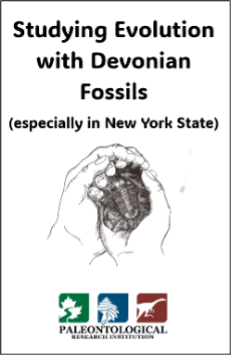
The loss of funding from Cornell and reduced staff at PRI resulting from our financial crisis made this a somewhat subdued observance of Darwin’s 215th birthday. Our theme again reflected our current exhibit, “NY Rocks!”; in the previous year we had highlighted diversification of fish and origin of tetrapods, while this year we focused on evolution of Devonian marine invertebrates. Andy Bush of the University of Connecticut did an online talk in Science in the Virtual Pub https://www.youtube.com/watch?v=m71otdUAI9A. For Family Day in the Museum, we produced a leaflet called “Studying evolution with Devonian fossils (especially from New York State)”. We reached about 100 people through those two events. We also did a series of seven daily Instagram posts on fossils and evolution linking to PRI online evolution resources, which received 327 "likes" (viewed by many hundreds more). Warren wrote a blog post on “The Origin of Species as a Great Book” (https://www.priweb.org/blog-post/on-the-origin-of-species-as-a-great-book).
2025
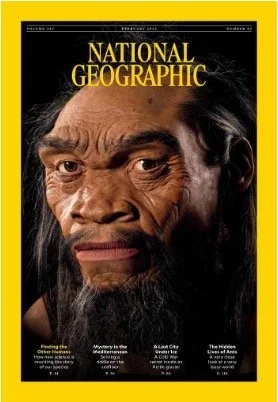
We celebrated with three events. On February 12, 50 people attended a talk in the Museum by John Gurche, who spoke about his work reconstructing the face of the Harbin skull, a 140,000-year-old hominin from China, which was featured on the cover of the recent National Geographic, making it John’s fifth cover for the magazine over his 50+ year career.The next evening, about 75 people attended the zoom talk by Professor Jason Wiles from Syracuse University on the state of evolution education in the U.S. On February 15, despite snowy weather, more than 90 people came to the Museum for activities and programs celebrating both Darwin and whales (the following day was International Whale Day). Staff and volunteers were at tables with lots of hands-on activities and touchable modern and fossil whale specimens. Cornell PhD student Marissa Garcia and Postdoctoral Fellow Irina Tolkova jointly presented a talk on using bioacoustics to study North Atlantic Right Whales. Warren’s annual blog post focused on Darwin’s thoughts on meeting the indigenous people of Tierra del Fuego on the voyage of the Beagle: https://www.priweb.org/blog-post/fin-del-mundo-1
2026
In 2026, in conjunction with the current exhibit at the Museum, “Marvelous Mollusks”, we celebrate the evolution of mollusks, which are the second most diverse group of animals (after insects), and have been the subject of enormous evolutionary research since Darwin’s time. We are once again back at Cinemapolis with a showing of “Inherit the Wind”, a talk in Science in the Virtual Pub by Jessica Goodheart from the American Museum of Natural History on the evolution of sea slugs (nudibranchs), and Family Day at the Museum, with a talk by Rebecca Rundell from SUNY ESF on land snail evolution.
What have we learned in 20 years of hosting Darwin Days?
We host Darwin Days as part of PRI's mission as a natural history museum and as an area of special focus in our educational outreach. Hosting such an annual celebration, each year with varied events for multiple audiences, is challenging but also rewarding.
Focusing outreach on evolution, a unifying idea in biology, has provided myriad opportunities to connect colleagues of many backgrounds, to our own work and to each other. After choosing a theme each year, we search for researchers and educators whose work touches upon that theme; we are often forced to reach outside of our existing circle of contacts to invite speakers we didn't previously know, and panelists on the same topic often meet each other for the first time. Presenters, who may not typically speak to public audiences or think about their research from the specific lens of our theme, are stretched to present in new ways. The resulting relationships often result in additional collaborations years later.
Darwin Days has also provided us an impetus to revisit our own approaches and resources for teaching evolution. For example, with each annual theme, we develop new activities for Family Day, new approaches to highlighting evolution in the Museum of the Earth exhibits through tours and pamphlets, and reflecting on new topics for Darwin Days blogs (such as this one).
As circumstances and contexts have changed over the years, so too have our approaches. Early Darwin Days were focused on defending teaching of evolution, in response to the Dover trial. For over a decade most academically-oriented presentations occurred on the Cornell campus, where the events received most of their funding and audiences. In contrast, in recent years, most of our academic talks have been held online, especially as part of the Science in the Virtual Pub webinar series. This has allowed both speakers and audiences from across the country, while (ironically) facilitating greater attendance by Cornell students; these are captured on PRI's YouTube channel and contribute to our online evolution education resources. In-person talks continue, but they have been taking place mainly off campus, in the community, for example, at the Museum of the Earth and at our local Public Library.
Why continue after 20 years of Darwin in Ithaca?
“Evolution” may sound like something technical or exotic, something that can only be examined in a genetics lab or the Galapagos Islands. But evolution and its results are all around us, all the time. All living things on earth – plants, animals, fungi, microbes, bacteria, and human beings – are all the products of evolution. The evidence for this is overwhelming and can be seen in all aspects of the natural world.
Evolution is at the very center of almost everything that goes on at natural history museums like PRI. It is the central theory that guides our research, collections care, and public education efforts. Natural history museums, indeed, are at the center of the study of evolution. We are the repositories of its evidence, as well as vital places of research into its patterns and processes and essential places for the public to go to learn about and be inspired by it. So it is only natural that we celebrate the man who did more than anyone to convince the world that evolution has occurred and to illuminate its most important mechanism.
Ithaca’s Darwin Day celebration started at one of those times in American history when the teaching of evolution had come under assault. Today is unfortunately also one of those times, but now the assaults are not just on evolution but on all science, and indeed on all forms of expertise and observation-based knowledge. So it is more important than ever to continue to celebrate one of the greatest scientists who ever lived, and the explanatory power and grandeur of his view of life.
Acknowledgments
Ithaca Darwin Days would not have happened or been so successful over the past 20 years without the efforts of numerous PRI staff and volunteers, as well as numerous community members and organizations. In particular, we thank the series of PRI Evolution Education Managers who helped coordinate and shape these events: Trisha Smrecak, Kelly Cronin, and Andrielle Swaby. Don Haas runs Science in the Virtual Pub webinar series that features a Darwin Days speaker annually. We are also very grateful to the many guest speakers and panelists, especially at Cornell University, wo have shared their expertise. Special thanks are due to Stephen Loewentheil for providing very generous early financial support, and for convincing others to do the same. Major support for many years also came from Derek and Leora Kauffman and various offices and departments at Cornell, where Tommy Bruce and John Guttenberger were particularly important cheerleaders. To all, our sincere thanks.